Yes I'm aware that I'm half a decade behind the curve, but the trusty Canon 40D had served me so well over the years that I hadn't felt the need to upgrade. (Before that, I'd used a 350D / Rebel XT.) However, in recent months I'd noticed that my photos were starting to look a bit "samey" and I wondered if I was reaching the limits of what I could do with the 40D.
 |
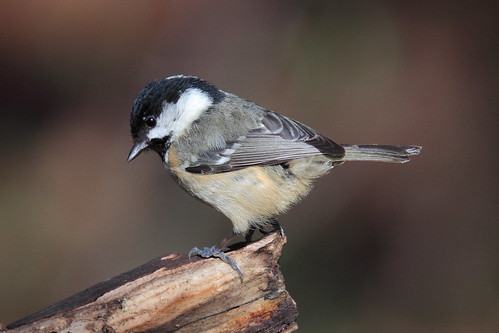
| Canon 7D & Tele Vue-60; 1/1600 sec, ISO 800 |
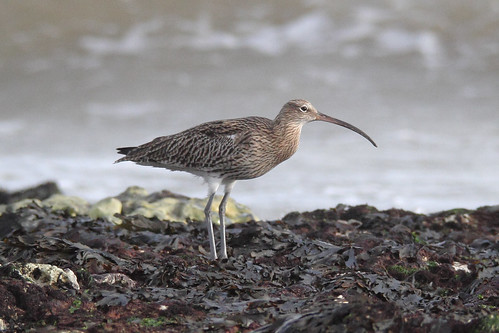
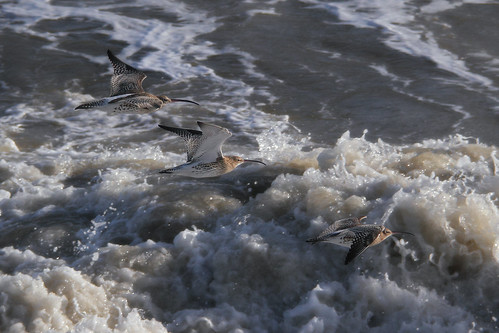
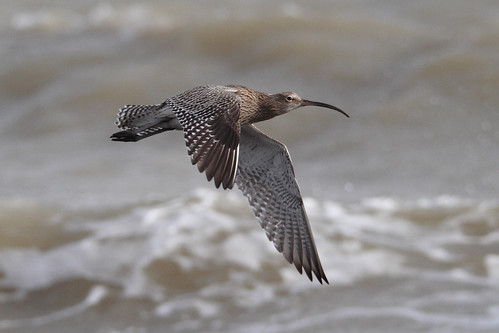
Enter the 7D Mk I. Enough's been written about this camera online and in print already, so I'll let the pictures do most of the talking and add a few observations along the way.
 |
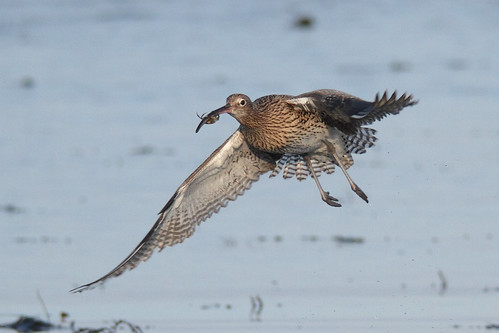
| Canon 7D & Tele Vue-60; 1/1250 sec, ISO 640 |
10 to 18 Megapixels: I was worried that all those extra pixels might magnify the shortcomings of my style of shooting (mostly hand-held, with a manual-focus telescope) rather than improve the quality of my photos, but it turns out the 7D is an excellent match for the
Tele Vue-60 (my wildlife lens of choice). I now have much more leeway to crop and re-frame the subject while still being able to produce a decent-sized print if necessary.
 |
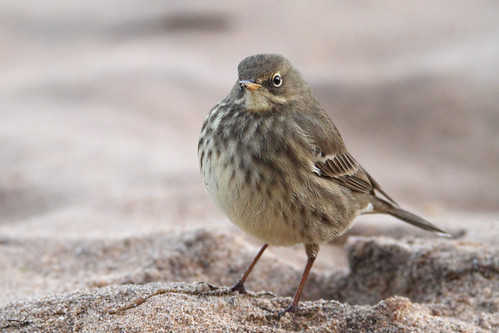
| Canon 7D & Tele Vue-60; 1/2000 sec, ISO 800 |
Auto ISO: Although this was a feature on the 40D, it never really lived up to its potential. On the 7D it does. Whereas before I used to shoot in Aperture-Priority AE (Av) and let the camera choose the exposure time, I can now shoot in Shutter-Priority AE (Tv), choose a shutter speed appropriate for the subject and the focal length of the TV60 (typically anywhere from 1/1000 sec to 1/2500 sec depending on how much coffee I've drunk that morning), set the Exposure Compensation for the lighting conditions, and let the camera choose the correct ISO.
 |
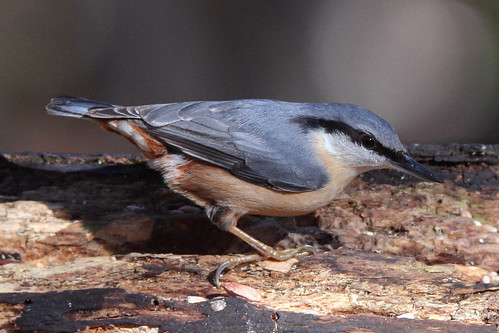
| Canon 7D & Tele Vue-60; 1/1600 sec, ISO 2000 |
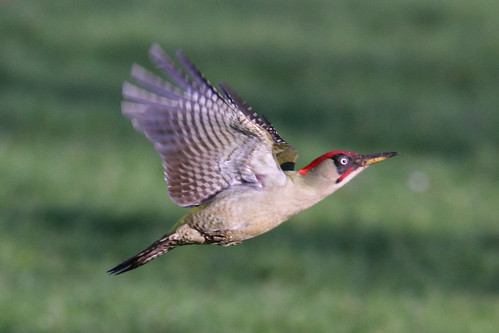
Noise: From what I've seen on Internet forums, this seems to be the biggest bone of contention about the 7D, with some users getting very clean images all the way up to ISO 3200, and others claiming it's unusable above ISO 800! (It's worth noting here that because of the way a
Bayer filter works, the camera captures twice as much information in the green channel as it does in the other two channels, which may explain why photos of birds against blurred green backgrounds seem to show less noise.) Personally, I don't mind a bit of noise as long as it isn't too obtrusive, and I actually prefer a bit of grain over the plasticky effect you see in some over-processed photos. With regards to the 7D, I find that the RAW conversion needs a little more fine-tuning in Digital Photo Professional than I'm used to, but with care I can get an image at ISO 3200 which is no noisier than an image taken at ISO 1600 with the 40D. This, when you factor in the higher resolution of the 7D, is a considerable improvement. Obviously, I'm still getting used to the camera as well adapting my methods of post-processing, but my impressions so far are overwhelmingly positive. Also, it seems to me that the 7D sometimes errs slightly on the side of over-exposure, which ironically can make for a cleaner final photo.
 |
| Canon 7D & Tele Vue-60; 1/1600 sec, ISO 3200 |
Are my photos significantly better? The Flickr community seems to think so. I know that comments and faves aren't always a reliable measure of quality, but my views have shot up since I started posting photos taken with the 7D, with at least four images hitting the giddy heights of Explore. Or is all that traffic a side-effect of people searching for photos taken with the 7D
Mark II?
 |
| Canon 7D & Tele Vue-60; 1/1250 sec, ISO 1250 |
Decide for yourself:
see more of my photos taken with the Canon 7D.