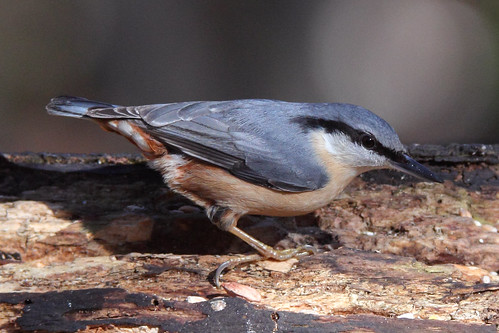
Showing posts with label 40D. Show all posts

Saturday, 28 October 2017

Shooting with the Canon 80D

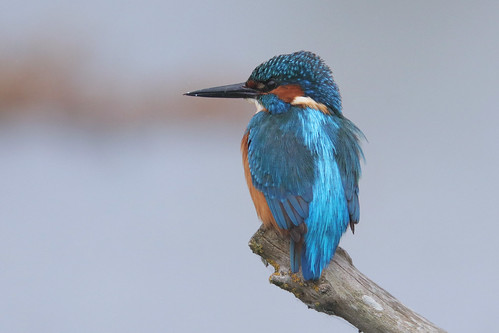
Kingfisher (Alcedo atthis)
Canon 80D & Tele Vue 60 refractor, 1/1250 sec, ISO 640

I tend to steer clear of technical write-ups on this blog as the Internet is already stuffed with photographers telling you all about what their camera can do rather than what they've actually done with it. However, given that the bulk of the traffic to my Flickr pages this year has been driven by people specifically looking for photos taken with the Canon 80D, I thought I'd share my impressions after several months of shooting with it. Please bear in mind that this is all very subjective and I can only compare the 80D against other Canon DSLRs I've used (namely the 350D, 40D and the 7D Mark I).

Noise-handling is significantly improved over the 7D Mk I. Tastes vary of course (I don't mind a little grain as long it doesn't look too obviously "digital" - and I actually prefer it to the over-aggressive noise reduction that some photographers insist on), but I find the 80D gives exceptionally clean images up to ISO 400, and stays workably clean all the way up to ISO 3200. The image below was taken in very gloomy conditions at ISO 3200, but I was still able to get a good 12x8 print out of it.
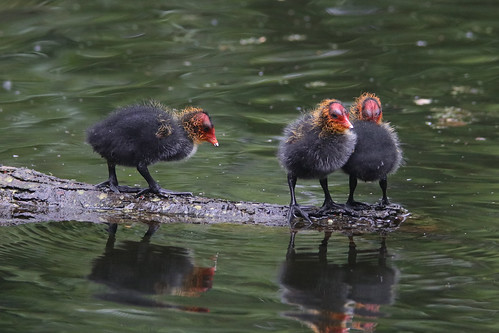
Coot Chicks
Canon 80D & Tele Vue 60 refractor, 1/1250 sec, ISO 3200

From ISO 4000 the noise gets progressively more obtrusive, but still manageable (as demonstrated in this shot of a black cat, taken in poor light at ISO 5000 and downscaled to 12x8). Even at the highest ISOs the 80D's large pixel count means that you should be able to get an acceptable 6x4 print provided you don't have to crop too much.

The 80D's default colour setting seems slightly desaturated compared to previous models, but this can be easily fine-tuned in-camera or in post. The "Peacock Butterfly" test certainly produces reds that look closer to nature than the over-saturated reds of older Canon DSLRs.

I use manual focus for most of my wildlife photography so I can't really contribute anything to the 80D vs. 7D Mk II autofocus debate, but on the occasions I've used the touchscreen focus I've found it to be fast, responsive and very intuitive to use. If, like me, you plan to use your camera for astrophotography now and then, you might consider the 80D's articulated touchscreen to be a more valuable feature than the 7D Mark II's advanced tracking.

Birds-in-flight are always going to be a challenge using manual focus, but so far I've found that my hit-rate is better than with any previous Canon DSLR. Would autofocus have successfully tracked this tern or would it have zeroed in on the coots in the background?
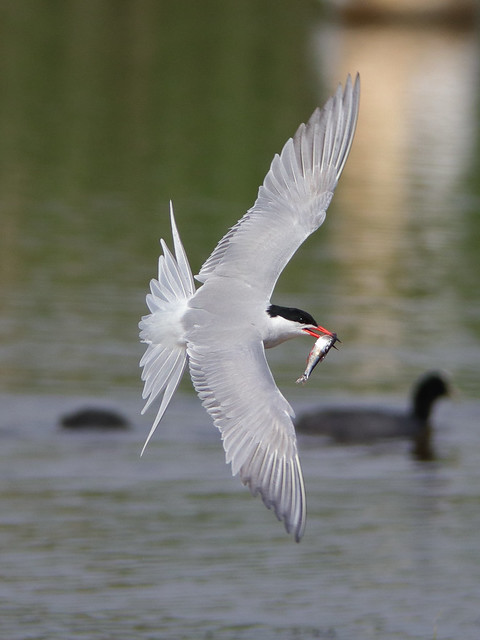
Tern (with fish)
Canon 80D & Tele Vue 60 refractor, 1/1600 sec, ISO 400

Much has been made of the 80D's improved dynamic range at lower ISOs, and you'll find plenty of examples online where photos have been deliberately underexposed by an extreme number of stops and then fixed in Lightroom/Photoshop to demonstrate the camera's capacity for shadow recovery. In real-world terms you'd have to be doing something drastically wrong to underexpose a photo by that much without realising (and the metering is almost always spot-on - more so than any other camera I've used), but the improved DR does give you scope to be more adventurous in your post-processing, especially when trying to emphasise a particular mood. See this black-and-white shot of Whitby Abbey below for an example (move your cursor across the image to toggle the before-and-after):

Canon 80D + EF50mm f/1.8; 1/250 sec, f/8.0, ISO 125

I'm struggling to think of anything I don't like about the 80D: I miss the mini-thumbstick from the 40D and the 7D, but the touchscreen makes up for this. Overall the Canon 80D is a user-friendly and feature-packed camera (including settings for time-lapse, multi-exposure, minimum shutter speed, flicker detection, and so on) that does everything I would want from a DSLR.


See also:
More of my photos taken with the Canon 80D


Saturday, 10 December 2016

Birds of Ramsgate Harbour

Given that one of the attractions of going out with the camera is to escape from the hustle and bustle of everyday life, a busy harbour wouldn't normally be my first choice of destination. However, a visit to Ramsgate during the winter months may occasionally provide close-up views of certain sea-bird species which, while not being particularly rare, are more usually seen as distant specks flying above the waves.

Afloat 

This Red-throated Diver, photographed in November 2014, visited Ramsgate at a time when the harbour was getting a bit of a reputation for being a Diver graveyard. It wasn't feeding and the only time I saw it do anything other than float listlessly was when it was being harassed by a seal.

Great Northern Diver (Gavia immer) 

The R-TD eventually disappeared (almost certainly perished), but this Great Northern Diver, which arrived at Ramsgate the following winter, was in a much healthier condition. During its long residence it demonstrated that the harbour is home to a surprising variety of fish and crabs (at least, it was until the Diver ate them).

Eider (Somateria mollissima) 

This female Eider (a sturdy sea-duck usually seen bobbing up and down a long way offshore) visited the harbour in January 2016. It paddled in, spent about half an hour looking around, diving, and flapping its wings, and then it paddled out again. Fortunately I happened to be in the right place at the right time (for once).

Shag (Phalacrocorax aristotelis) 

Although you can't see it from this angle, this Shag, photographed in November 2016, is sporting a blue colour ring (letters AUR). As reported by Scott Haughie, it was ringed on Staple Island up in the Farnes in June and made its way south to Ramsgate (other sightings from the scheme have been in Holland).

Guillemot (Uria aalge)

The Collins Guide says of auks: "Most commonly seen at coasts during and after gales", and so it proved with this little Guillemot, which took shelter in the harbour after Storm Angus had swept through the Channel.

Sea-going species aren't the only birds that make Ramsgate their home during winter. If you're lucky you may spot one of the local kingfishers, as documented by Keith Ross.

See also:
More of my photos from Ramsgate Harbour (Flickr)
Keith Ross's Video Channel (YouTube)

Monday, 2 March 2015

40D to 7D

Yes I'm aware that I'm half a decade behind the curve, but the trusty Canon 40D had served me so well over the years that I hadn't felt the need to upgrade. (Before that, I'd used a 350D / Rebel XT.) However, in recent months I'd noticed that my photos were starting to look a bit "samey" and I wondered if I was reaching the limits of what I could do with the 40D.

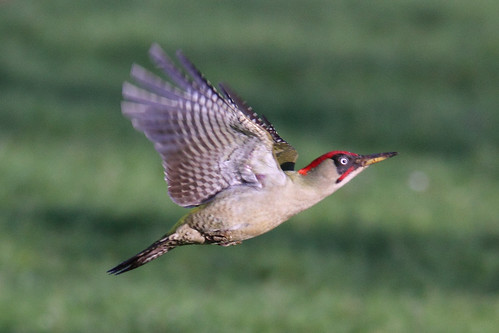
Green Woodpecker in Flight
Canon 7D & Tele Vue-60; 1/1600 sec, ISO 800

Enter the 7D Mk I. Enough's been written about this camera online and in print already, so I'll let the pictures do most of the talking and add a few observations along the way.

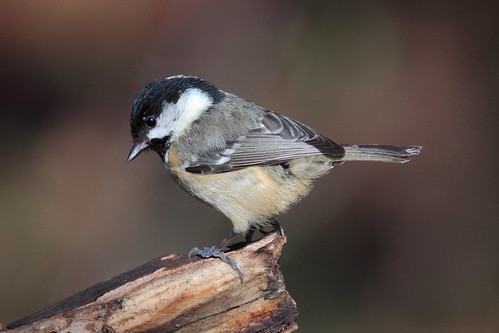
Coal Tit (Periparus ater)
Canon 7D & Tele Vue-60; 1/1250 sec, ISO 640

10 to 18 Megapixels: I was worried that all those extra pixels might magnify the shortcomings of my style of shooting (mostly hand-held, with a manual-focus telescope) rather than improve the quality of my photos, but it turns out the 7D is an excellent match for the Tele Vue-60 (my wildlife lens of choice). I now have much more leeway to crop and re-frame the subject while still being able to produce a decent-sized print if necessary.

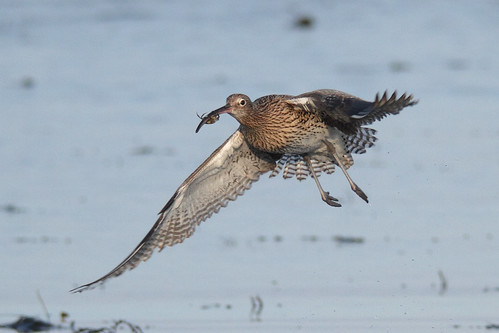
Curlew (with crab)
Canon 7D & Tele Vue-60; 1/2000 sec, ISO 800

Auto ISO: Although this was a feature on the 40D, it never really lived up to its potential. On the 7D it does. Whereas before I used to shoot in Aperture-Priority AE (Av) and let the camera choose the exposure time, I can now shoot in Shutter-Priority AE (Tv), choose a shutter speed appropriate for the subject and the focal length of the TV60 (typically anywhere from 1/1000 sec to 1/2500 sec depending on how much coffee I've drunk that morning), set the Exposure Compensation for the lighting conditions, and let the camera choose the correct ISO.

Moorhen (Gallinula chloropus)
Canon 7D & Tele Vue-60; 1/1600 sec, ISO 2000

Noise: From what I've seen on Internet forums, this seems to be the biggest bone of contention about the 7D, with some users getting very clean images all the way up to ISO 3200, and others claiming it's unusable above ISO 800! (It's worth noting here that because of the way a Bayer filter works, the camera captures twice as much information in the green channel as it does in the other two channels, which may explain why photos of birds against blurred green backgrounds seem to show less noise.) Personally, I don't mind a bit of noise as long as it isn't too obtrusive, and I actually prefer a bit of grain over the plasticky effect you see in some over-processed photos. With regards to the 7D, I find that the RAW conversion needs a little more fine-tuning in Digital Photo Professional than I'm used to, but with care I can get an image at ISO 3200 which is no noisier than an image taken at ISO 1600 with the 40D. This, when you factor in the higher resolution of the 7D, is a considerable improvement. Obviously, I'm still getting used to the camera as well adapting my methods of post-processing, but my impressions so far are overwhelmingly positive. Also, it seems to me that the 7D sometimes errs slightly on the side of over-exposure, which ironically can make for a cleaner final photo.

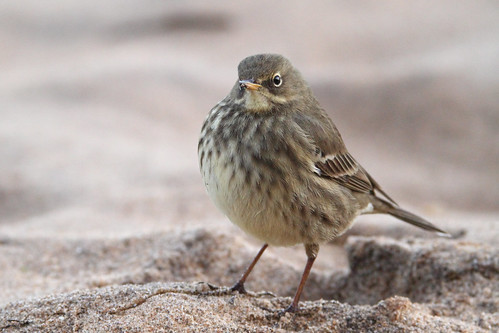
Rock Pipit (Anthus petrosus)
Canon 7D & Tele Vue-60; 1/1600 sec, ISO 3200

Are my photos significantly better? The Flickr community seems to think so. I know that comments and faves aren't always a reliable measure of quality, but my views have shot up since I started posting photos taken with the 7D, with at least four images hitting the giddy heights of Explore. Or is all that traffic a side-effect of people searching for photos taken with the 7D Mark II?

Nuthatch (Sitta europaea)
Canon 7D & Tele Vue-60; 1/1250 sec, ISO 1250

Decide for yourself: see more of my photos taken with the Canon 7D.

Monday, 1 September 2014

Broadstairs Water Gala 2014


Once again Broadstairs was blessed with sunshine and blue skies for the 2014 Water Gala, although the crowds seemed slightly down on the previous year. The good visibility and light breeze meant that all three planned air displays could go ahead, beginning with the Extra 300, which looked like it was pulling quite a few g's as it looped and soared:


This was followed by the Trig Aerobatic display team with their precision formation flying:


And finally, what I - and just about every other photographer there - had really come to see, the Grace Spitfire:


Pictures only tell half the story. It was a real privilege to hear that Merlin engine roaring over Viking Bay.

The Gala was rounded off by a fireworks display in the evening. It seems mandatory these days for every display to be accompanied by a hovering drone shooting footage from a bird's-eye perspective (not that any bird would fly near a firework). Was it wrong of me to feel disappointed that the drone survived the display without getting hit? The organisers must have been in a hurry to get home, as the last thirty or so fireworks all seemed to go off at once, much to the delight of the watching crowds. Intentional or not, it provided a suitably window-rattling finale to what had been a highly entertaining day.

See also:
More of my photos of the 2014 Water Gala
Broadstairs Water Gala (official page)
Trig Aerobatic Team
The Grace Spitfire ML407


Saturday, 30 November 2013

Birds of East Kent: Rock Pipit

Latest in an occasional series of posts discussing the different birds that can be found in East Kent and how easy (or not) it is to get a decent picture of them.

Rock Pipit (Anthus petrosus)
Dumpton Gap, November 2010

Many, many centuries ago, before the invention of paper and scissors, our ancestors used to settle disputes by playing a game of Rock Pipit, Tree Pipit, Meadow Pipit. The rules have long been lost in the mists of time (as there was nothing to write them down on), but they were believed to go something like this:

  • Rock Pipit chops down tree containing Tree Pipit
  • Tree Pipit craps on Meadow Pipit from overhanging branch
  • Meadow Pipit lures Rock Pipit into the long grass and kills it in a surprise attack

This already over-elaborate game was further complicated when some players tried to gain an unfair advantage by adding Water Pipits and Tawny Pipits to the line-up. In this expanded version, the Water Pipit drowns both the Rock Pipit and the Meadow Pipit, and as for a Tawny Pipit ... well no one could agree what the hell a Tawny Pipit does (although, at time of writing, it is the only member of the Pipit family to have a feature film named after it). At this point the game was usually abandoned and the dispute settled by actual fighting.

Of course, these days few people are aware of this unusual chapter in the Rock Pipit's history, and the bird itself is often overlooked as a small brown thing that frequents rocky coastlines. However, what it lacks in appearance it makes up for in character, and it can sometimes be surprisingly approachable, particularly along the undercliff promenade between Viking Bay and Dumpton Gap. This stretch is popular with dogwalkers, and so the birds are used to people walking by.

In some places (Foreness springs to mind) Rock Pipits can be found in close proximity to Meadow Pipits, though the latter tend to keep to the top of the cliff and the former at the bottom. Visually, Rock Pipits are distinguished from Meadow Pipits by their darker legs, slightly stockier build, and generally more smudged streaking in the breast. You may also notice a slight olive tint to the feathers.

If you're really observant (and you've got nothing better to do) you may be able to spot some foreign interlopers in the shape of the Scandinavian Rock Pipit (Anthus petrosus littoralis), a subspecies of the regular Rock Pipit. The differences are subtle, particularly outside of the breeding season, but are generally told by a blue-grey tint to the back and a more prominent supercilium (eye-stripe). The photo at the top of this post may indeed be an example of the Scandinavian variety.


A Bug's Death
Broadstairs, September 2013

See also:
More of my Rock Pipit photos on Flickr
Rock Pipit (RSPB)
Rock Pipit (Birdforum)
Rock Pipit (Birdguides)

Monday, 26 August 2013

Broadstairs Water Gala 2013

A packed Viking Bay played host to Broadstairs' annual Water Gala last week, featuring jet skis and flyboarding, and a visit from the Ramsgate lifeboat. A three-part air display was also scheduled, and perfect conditions meant that all three planes could take to the skies as planned.

First up was the Catalina seaplane G-PBYA, visiting Broadstairs on day one of its Circuit of Britain challenge:

Catalina Seaplane (detail)

This 70-year-old plane is the only airworthy Catalina in the UK, and it made several passes of the bay before continuing on its tour, making sure everyone got to see it from all sides.


The Catalina was followed by the Yak 50 G-CBPM, one of the Aerostars display team that performed here last year:

Yak-50 G-CBPM

Finally, Manston's very own trusty old Boeing Stearman biplane, a plane I've seen several times over the years, but never had the opportunity to photograph against blue skies until now:

Boeing Stearman Biplane

The festivities were rounded off by a fireworks display in the evening. I left my camera at home for that, figuring I'd already taken quite enough photos for one day.

See also:
More of my photos of the Water Gala
Broadstairs Water Gala (official page)
Project Hawker 2013


Sunday, 30 June 2013

Birds of East Kent: Marsh Harrier

Latest in an occasional series of posts discussing the different birds that can be found in East Kent and how easy (or not) it is to get a decent picture of them.

Marsh Harrier

This bird of prey (the largest of the harriers) is one of the showpiece species of East Kent (maybe even of the whole county) and the RSPB website rightly lists Stodmarsh (where it can be found all year round) as one of its strongholds. Indeed, a visit to Grove Ferry / Stodmarsh doesn't feel complete without a sighting of one of these majestic birds gliding over the reedbeds in search of prey. And yet, for all the times I've seen them, I've still to acquire what I consider a really good picture. You'd think, for their size and languid flight, it would be easy to see them approaching, but they have a knack for suddenly appearing out of nowhere and then either plunging into the reeds or spiralling up on a thermal. You may not know where they are, but they always seem to know where you are.

Marsh Harrier comparison

Male and female Marsh Harriers are fairly easy to tell apart; males (above left) are lighter, with characteristic dark wing-tips. Females (above right) are bulkier and darker, with cream-coloured crowns. Juveniles appear similar to the adult females, but are distinguished by their golden crowns.

During the breeding season, male Marsh Harriers show off to the females with spectacular displays of sky-dancing (and if the wind's blowing the right way you can hear them calling to each other). This aerial prowess serves a valuable purpose later on as the male will be required to pass food to the female in mid-air rather than bring it directly to the nest. These food items are usually small birds as far as I've been able to tell, but I imagine the ubiquitous Marsh Frog must make up a large part of their diet.

Marsh Harrier (+ food pass)

My most memorable sighting of a Marsh Harrier came - ironically enough - not at Grove Ferry, but at Minster a few years ago. I set off on what I thought was going to be a clear sunny morning, but arrived on the marshes to find the whole area shrouded in a thick bank of fog. As I walked alongside the river waiting for the sun to break through, a large shape rose out of the mist just twenty feet away and I found myself face to face with a Marsh Harrier. It flew gracefully in front of me and disappeared into the fog on the other side of the river. I didn't take any pictures (they wouldn't have come out anyway), but on that occasion it was just a privilege to get that close to one of Britain's most captivating birds of prey.

See also:
More of my Marsh Harrier photos on Flickr
Marsh Harrier (RSPB)
Marsh Harrier (Birdforum)


Friday, 31 May 2013

Have I Got Newts For You

This time last year I'd never knowingly seen a newt outside of a book or a TV programme. Then, in a pond not far from where I work, I spotted several of these:

Great Crested Newt larva

This, I subsequently found out, is the larval form of the Great Crested Newt, the largest - and most endangered - of the three species of newt native to Britain. With its rough, granular skin, scythe-like tail and impressive jagged crest, the adult male Great Crested Newt is the closest you'll come to seeing a dragon in the English countryside, so - as you can imagine - I was rather keen to get a photo of one.

Like a lot of creatures, Great Crested Newts look at their best during the breeding season (i.e. now), but trying to photograph them is easier said than done. I quickly found out that they rarely come up to the surface, and when they do they typically dive straight back down again before you can get the camera anywhere near them. In the meantime, I had to console myself with getting pictures of the smaller Smooth (Common) Newt:

Smooth Newt

...and the equally diminutive Palmate Newt, with its distinctive webbed hind feet and tail filament:

Palmate Newt (Lissotriton helveticus)

But still no photos of a Great Crested Newt.

Then, just when it seemed that the pond would be covered with lily-pads before I even got so much as a single shot, my Great Crested Nemeses finally decided to cooperate:

Great Crested Newt (Triturus cristatus)

Okay, so they're not the cleanest photos I've ever taken, but shooting subjects in a pond (as opposed to a brightly-lit aquarium) is never easy at the best of times, and you can only do your best with what you've got. If you're trying it yourself I recommend a fast, close-focusing lens in the 100 - 300 mm range ... and a great deal of patience.

P.S. I apologise for the terrible pun headlining this post, but it was either that or the even more lame "Goodness Gracious, Great Crested Newts!"


See also:
More of my newt photos on Flickr
Great Crested Newt Conservation Handbook (froglife.org)