Showing posts with label photography. Show all posts

Wednesday, 3 November 2021

The Desert and the Snow

One of the highlights of living on this corner of East Kent is that it sometimes plays host to interesting or unusual birds, particularly during the passage seasons of spring and autumn. Occasionally you might even get two such visitors in the same week, as happened recently with one rare bird and one not quite so rare (though no less charming). And better yet, neither of them were camera-shy.

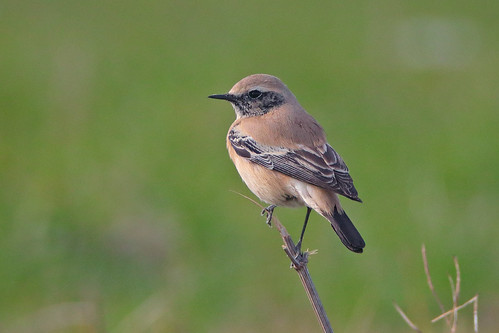
Desert Wheatear (Oenanthe deserti)

The first was a Desert Wheatear (above) which spent several days foraging for insects on and around Joss Bay. On the day I went to see it, it was frequenting the edge of the cauliflower field overlooking the bay.

The all-black tail pattern (as compared to the T-shaped pattern of the more common Wheatear) is one of its main distinguishing features, but it can be difficult to see unless the bird is in flight (as shown below).

Desert Wheatear (Oenanthe deserti)

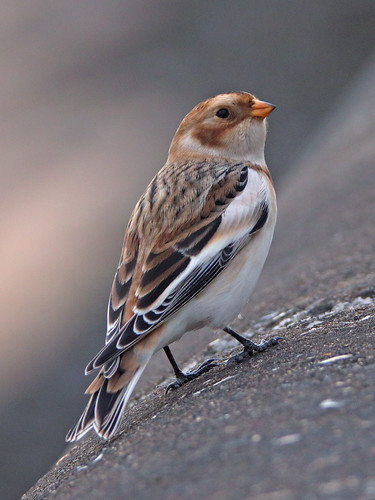
A few days after the Desert Wheatear departed, a Snow Bunting turned up on the stretch of coast between Dumpton Gap and Louisa Bay. Unlike the Desert Wheatear, Snow Buntings are annual winter visitors to the Kent coastline, though I usually have to go out to Reculver to see them.

Snow Bunting (Plectrophenax nivalis)

This little bird was even more confiding than the Desert Wheatear, and not at all fazed by the people walking past and the array of lenses pointing at it. I had to back away from it several times just to keep it in focus.

Whereas the Desert Wheatear was feeding on insects, the Snow Bunting was foraging for seeds, using its beak to break open the husks.

Will we receive any more visitors before the end of the year? It has been a long time since I saw a Shore Lark, and a Lapland Bunting would be very welcome...


See also:

Monday, 20 July 2020

A Very Photogenic Comet

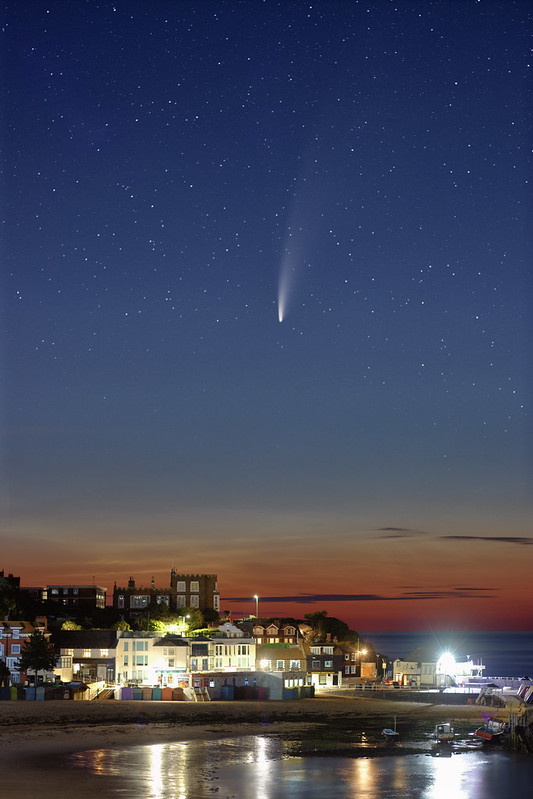
Comet NEOWISE over Viking Bay

"Comets are like cats: they have tails, and they do precisely what they want." - David H. Levy
I must admit, when I first heard that comet C/2020 F3 (NEOWISE) was on course to reach naked-eye visibility, my initial reaction was one of mild scepticism. After all, similar predictions had been made about comet C/2019 Y4 ATLAS (which promptly disintegrated) and comet C/2020 F8 SWAN (which also fizzled out). However, NEOWISE didn't just live up to expectations, it surpassed them - becoming certainly the best comet I've seen since Hyakutake and Hale-Bopp, the two Great Comets of the 90s.

Bright though it is however, NEOWISE (named after the space telescope that discovered it) is by no means a Great Comet like those two. Nor is it the first significant comet of the digital age (that honour must go to the spectacular Comet C/2006 P1 McNaught), but - due to its favourable placing for observers in the northern hemisphere - it's likely to become the most photographed comet in history (at least until the next bright one comes along). This is the fifth comet I've pointed a camera at, and it's easily the most photogenic, even if it did require me to leave the house at some very unsociable hours.

Comet NEOWISE should remain visible for the rest of the month, although it will - barring outbursts - become progressively fainter. At time of writing NEOWISE can be found in the late evening sky below Ursa Major (see the links at the end of this post for finder charts). You don't need a telescope to spot it; if your sky is dark enough it should be visible to the naked eye, and a modest pair of binoculars will give a really good view.

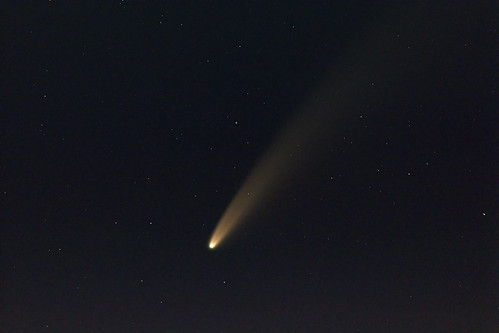
You don't necessarily need a long lens either if you want to try and photograph it (the image at the top of this post was taken with a standard 50mm prime). However, you will need a tripod and some means of operating the shutter without touching the camera (either a timer delay or a cable release). As I was shooting at a high ISO I also stacked multiple images and subtracted dark frames to further improve the signal-to-noise ratio. Here's another one taken at 400mm, showing the characteristic golden dust tail:

Comet C/2020 F3 (NEOWISE)

It's worth making the effort to see Comet NEOWISE at least once before it's gone; after all, it won't return to the inner solar system for nearly 7,000 years.

Links:
How to see Comet NEOWISE over the coming nights (Sky at Night Magazine)
Comet NEOWISE dazzles at dusk (Sky & Telescope)

Tuesday, 21 May 2019

Pied Crow Tour of Britain reaches Broadstairs

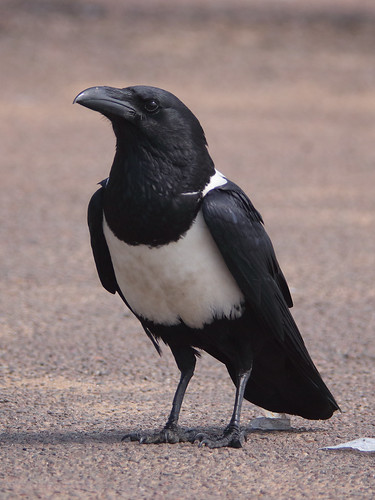
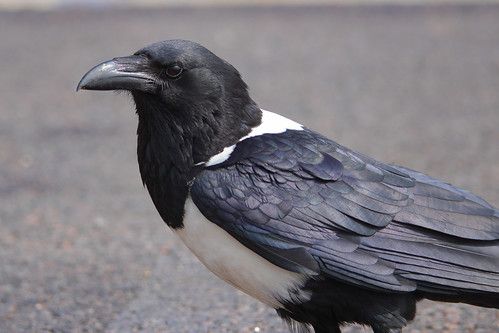
Pied Crow (Corvus albus)

When I first heard about a Pied Crow being sighted in East Kent I assumed it was some kind of birders' in-joke. After all, what is a "pied crow" if not the definition of a magpie? Also, there's no such bird mentioned in either the Collins Guide or the British Birds (WILDguides) book, not even in the once-in-a-lifetime lists of obscurities tucked away at the back.

But it turns out the Pied Crow is definitely not a magpie, as I found out when I caught up with it on Broadstairs jetty last Saturday (18 May). Even from a distance the white "vest" was obvious, and the bird itself is bigger than a conventional carrion crow (though not as large as a raven).

Pied Crow (Corvus albus)

So is this smartly-dressed corvid (normally a resident of sub-Saharan Africa) a genuine wild specimen or an escapee? I won't get into the speculation on where it might have come from as there's already plenty of that online by people far more knowledgeable than me on such matters, but I will refer you to this excellent article by Sam Viles on BirdGuides. Will it fly (or hitch a ride) across the Channel or will it continue its tour of Britain's seaside resorts? Like the outcome of B****t, your guess is as good as mine.

Next stop France?

As I think I've stated before on this blog, I don't keep a count of the birds I've seen and photographed (although I do keep an index), so it makes little difference to me whether or not it gets accepted onto an official list by the powers-that-be. But I do know that this unusual and striking bird has traveled a long way to get to where I live, so I'm glad I got to see it.

See also:
Birdguides: Pied Crow
Birdforum Opus: Pied Crow

Sunday, 30 December 2018

2018 in Pictures

I didn't think I'd be able to top the previous year, but 2018 served up a bumper crop of sightings (September in particular had enough highlights to fill a best-of list all by itself). But here for your viewing pleasure, after much vacillating, are the pick of the bunch:

January
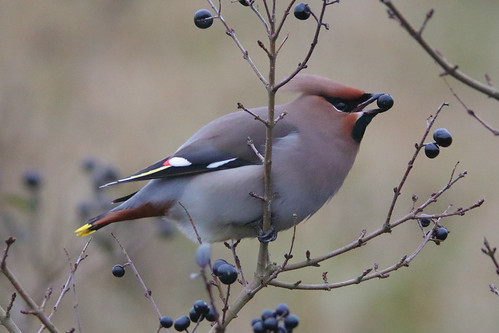
There's nothing like a Waxwing to brighten up a dull winter's day:

Waxwing (Bombycilla garrulus)

February
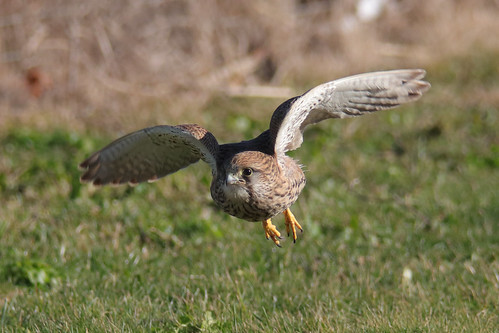
I've got to include at least one Kestrel (it's the Law) and this bird was a bit special:

Kestrel (Falco tinnunculus)

March
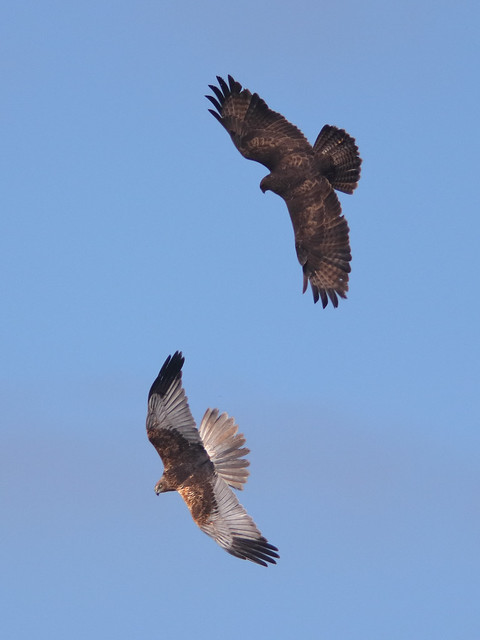
Why go to the trouble of catching your own frog when you can steal one from a Marsh Harrier?

Buzzard vs Marsh Harrier

April
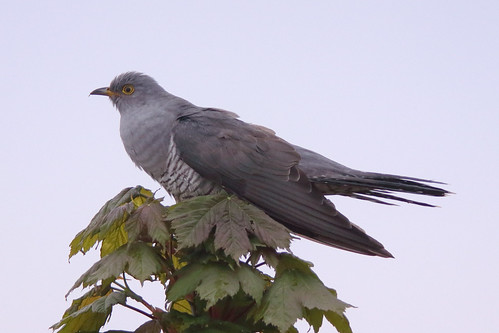
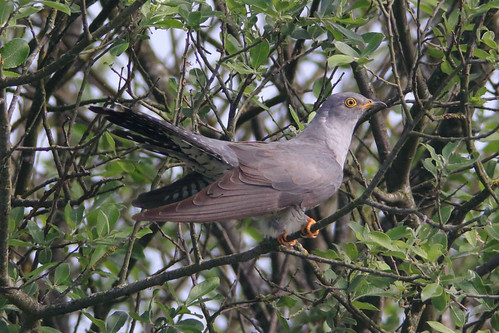
The light wasn't great that morning, but it's not every day that a Cuckoo pops up right in front of you:

Cuckoo (Cuculus canorus)

May
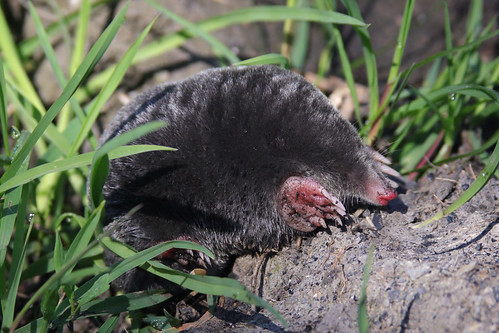
Here's something else you don't see every day, a Mole out in the open:

Mole (Talpa europaea)

...though it really wasn't the best day for small furry things to come out of hiding.

Also at Stodmarsh, a Hobby grabs an in-flight snack:

Hobby (Falco subbuteo)

June
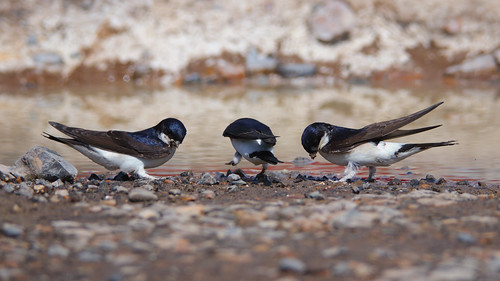
At Foreness Housemartins collect mud for their nests:

House Martins (Delichon urbicum) 

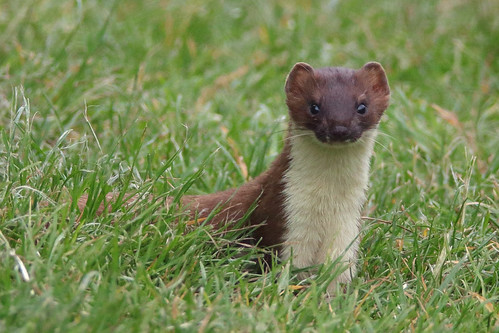
And a Stoat pops up at Stodmarsh:

Stoat (Mustela erminea)

July
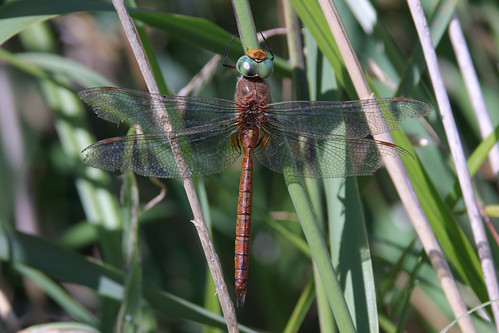
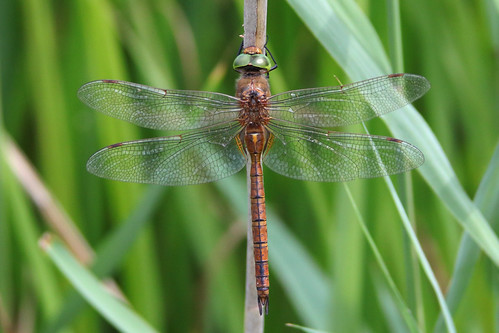
A typically quiet month for birds, but not for dragonflies such as this Norfolk Hawker:

Norfolk Hawker (Aeshna isoceles) 

August
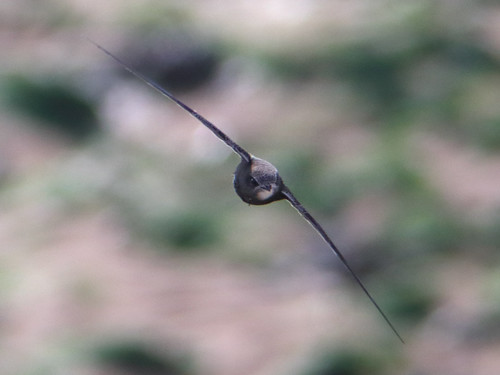
Last ones to arrive; first ones to leave. A Swift prepares for its autumn migration at North Foreland:

Swift (Apus apus)

September
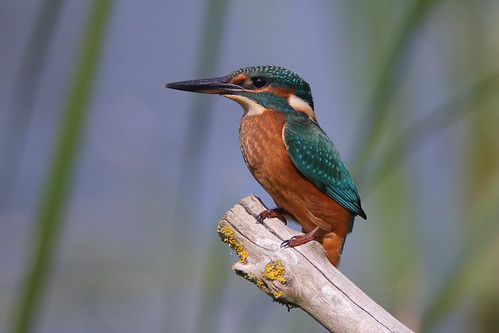
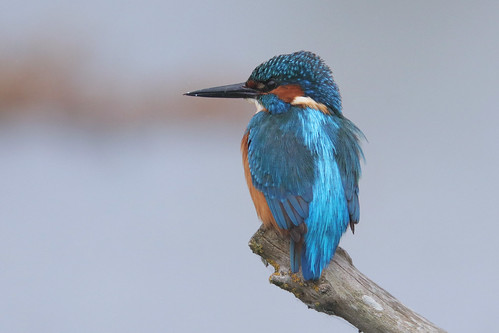
1st September at Grove Ferry was one of those rare and remarkable days where everything falls into place. It included Spotted Flycatchers and a Bullfinch (in the same tree), a Whinchat, and even a surprise Bittern. But it was the reserve's star attraction that stole the show:

Kingfisher (Alcedo atthis)

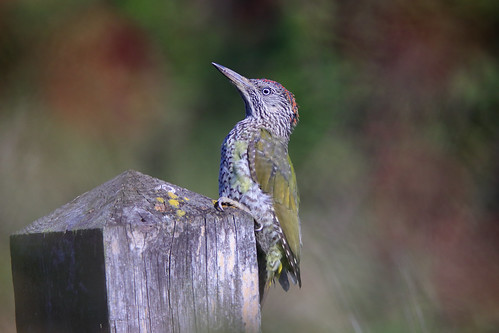
Return visits later in the month uncovered a Small Copper butterfly (the first one I can recall seeing at the reserve), plenty of Willow Emerald damselflies, Lizards, and this juvenile Green Woodpecker:

Green Woodpecker (Juvenile) 

October
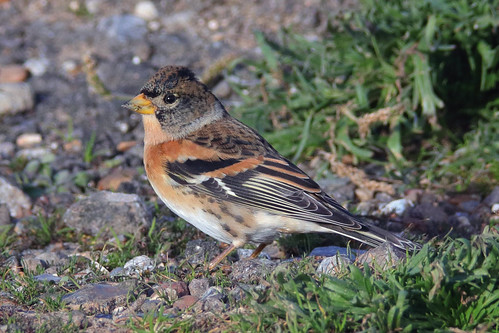
Winter birds start arriving along the coast, including this handsome Brambling at North Foreland:

Brambling (Fringilla montifringilla) 

November
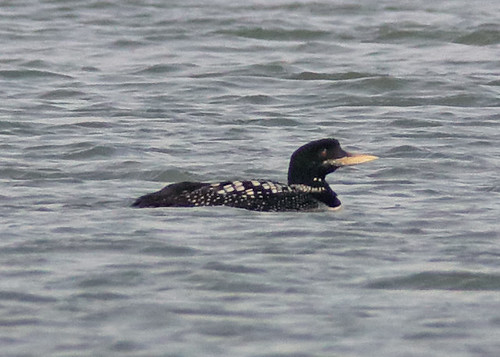
Not the best photo, but arguably the best bird of the year; Scott Haughie's White-billed Diver (in summer plumage!) which attracted birders and photographers from across the country:

White-billed Diver (Gavia adamsii) 

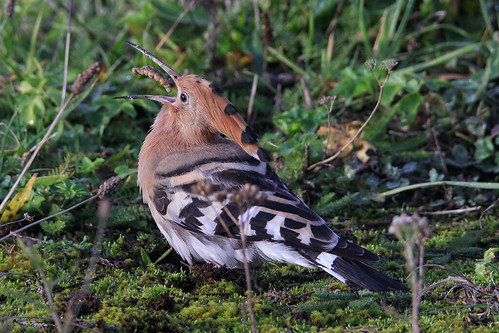
I expect I'll be frowned on in some quarters for including it, but this ESCAPED Hoopoe brought some entertainment (unless you're a grub) to an unlikely part of Thanet:

Grub's Up (again)

December
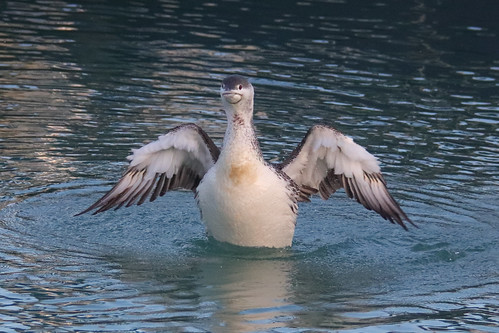
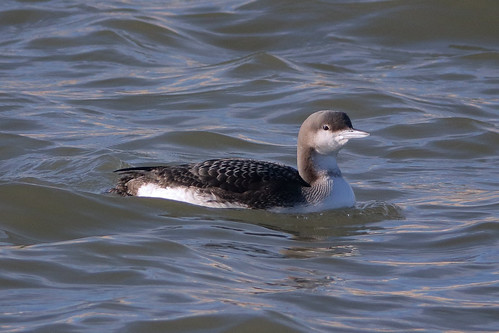
Another month, another loon; a Red-throated Diver (not in summer plumage) in Ramsgate Harbour:

Red-throated Diver (Gavia stellata)

All the photos on this page were taken with a Canon 80D DSLR and the trusty Tele Vue-60 refractor.

In the next post, I will be returning to outer space.

Wednesday, 22 August 2018

A Journey into Astrophotography

I'll say one good thing for He-Who-Must-Not-Be-Retweeted; he's encouraged me to turn my attention away from this increasingly nonsensical planet and back into deep space*. I've dabbled with astrophotography before (hand-tracking with a 50 mm lens), but mostly I've stuck to the brighter objects like the moon and Jupiter. Long-exposure astrophotography at focal lengths greater than 300 mm requires precise motorised tracking, but it was only after a trip to Astrofest 2018 (and some intensive research) that I figured out a practical and affordable way to go about it.

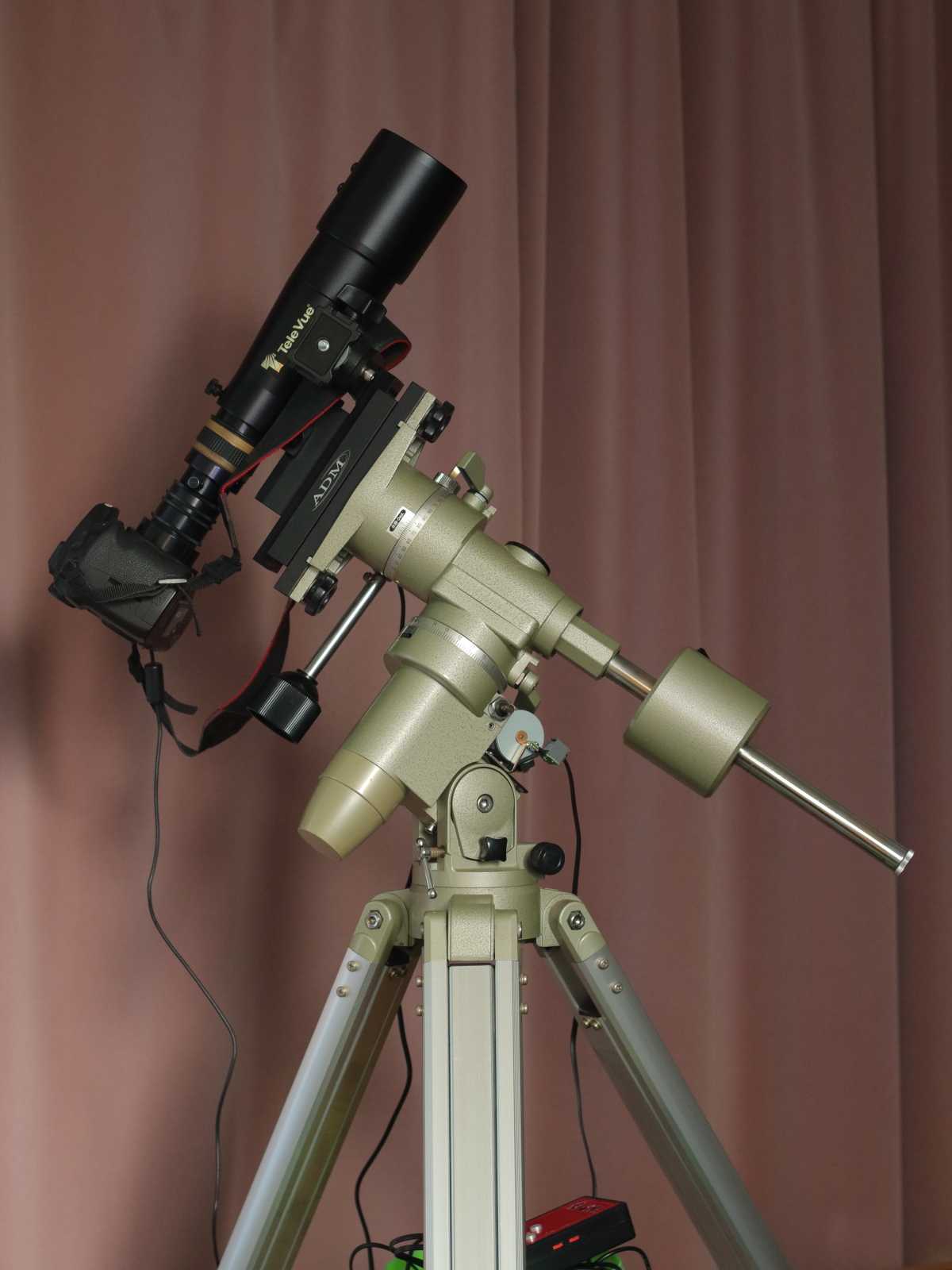
Here's a picture of the trusty Tele Vue-60 (the same scope I use for most of my wildlife shots) in its latest mode atop the equally trusty Vixen Super Polaris mount (fitted with Skywatcher dual-axis motor drives and an ADM dovetail plate adaptor):


With a field-flattener attached the TV-60 is roughly equivalent to a lens of 400 mm focal length. So far, this arrangement is good enough for exposures up to about two minutes duration depending on the accuracy of my polar alignment. (The Skywatcher handset does have an ST-4 port for autoguiding should I wish to attempt longer exposures in the future.) Here's another angle showing the motor drives attached to the Right Ascension and Declination axes:


Any serious astrophotographers visiting this blog might be shaking their heads at this point and muttering about vignetting and edge-of-field distortion, red sensitivity, thermal noise etc. in much the same way that serious wildlife photographers might mutter about autofocus and aperture control when they see what I'm using. But the point is, I don't get enough clear, moonless nights a year to justify spending the kind of megabucks that others spend on their gear. And, crucially, I can use the same DSLR and the same little scope for multiple purposes (which probably explains why the focuser is starting to look a little worse for wear). And (whisper it quietly) one good photo of the Orion Nebula looks very much like another good photo of the Orion Nebula, no matter where you are on the earth. Unless you have your own observatory equipped with an adaptive optics system, you're probably not breaking new ground.

That's not to say I won't be eagerly imaging the Orion Nebula when I get the chance just like every other amateur, but M42 is a spectacle of the winter sky, so for my first target I chose the globular cluster M13 (because it's big, bright, and not too far away from the north celestial pole):
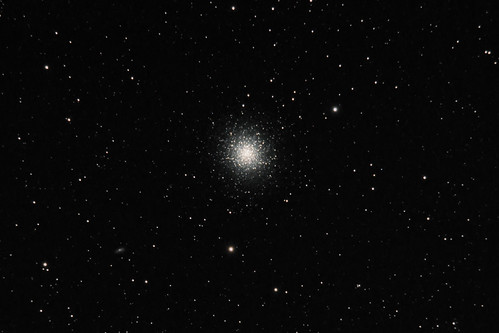
M13 Globular Cluster
M13, Tele Vue-60 + Canon 80D (30 x 1 min @ ISO 800)

The long exposure times required to make an image like this turn pinprick stars into blobs of light, giving the false impression that they are almost touching each other. Although direct interactions in globular clusters do occasionally happen (the most likely origin of blue stragglers), the average distance between stars in a typical globular is actually 0.1 to 0.5 light-years, a fraction of the distance between here and Proxima Centauri (4.2 light-years), but still many times the size of our planetary system. This image from the Hubble Space Telescope resolves the core of M13, giving a better impression of the star density. Around 150 globular clusters are known to orbit our galaxy, dipping in and out of the galactic plane in highly inclined orbits. To put that in perspective, M87, the giant galaxy at the heart of the Virgo Cluster, is surrounded by 16,000 globular clusters.

I recently had the pleasure of looking at M13 through a 10-inch telescope and the result was breath-taking (so much so that I completely forgot to look for NGC 6207 - the "little" galaxy visible towards the bottom-left of the image above).

In my 4-inch achromat M13 takes on the appearance of a "grainy snowball thrown against a pane of glass", always on the brink of being resolved but never quite making it, except when averted vision is employed. In the 10-inch scope (at 133x magnification with a 9mm Nagler eyepiece) it was transformed into a vast three-dimensional city of stars, its brighter members glinting like crushed diamonds right across the face of the cluster, with hundreds - perhaps thousands - more revealing themselves in averted vision. The longer I looked, the more impressive it became, as I began to discern chains of stars arcing out from the centre.

M13 is arguably the most spectacular globular cluster visible from UK latitudes, but there are several others which run it close, such as M3 in the constellation Canes Venatici:
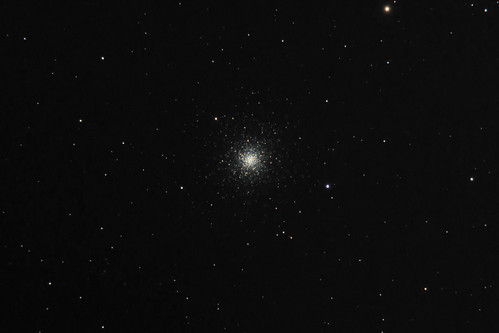
Messier 3
M3, Tele Vue-60 + Canon 80D (31 x 1 min @ ISO 800)

Of course, acquiring the images is only half the battle; processing them is an art-form in itself. I'll leave those details for another time as I'm still very much a beginner at this, but if you want to know what software I used, the links are here.

In the meantime, if you ever get the opportunity to look at M13 or any of the other showpiece globulars through a medium to large-sized telescope, I strongly recommend it. Drink in the spectacle, contemplate what you're seeing, and then look at it again. Photographs just can't do it justice.

See more of my TV-60 deep-sky photos on Flickr.


*Famous last words... While I was drafting this post, He-Who-Must-Not-Be-Retweeted announced the creation of SPACE FORCE (I swear I can hear the echo as I'm typing it). It seems there really is no escape from the Tangerine Nightmare.

Sunday, 13 May 2018

Birds of East Kent: Kestrel

Latest in an occasional series of posts discussing the different birds that can be found in East Kent and how easy (or not) it is to get a decent picture of them.

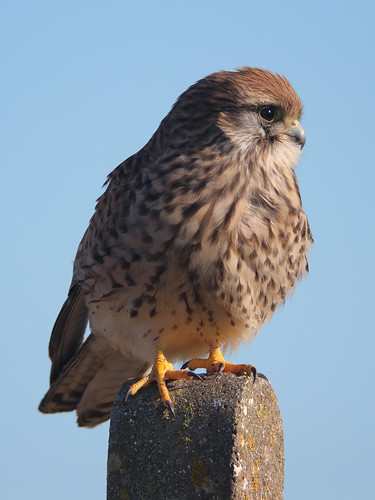
Kestrel (Falco tinnunculus)

I don't usually bother with top-ten lists or stuff like that, but if I had to choose a favourite bird it would undoubtedly be the Kestrel. It's not the biggest (or smallest) bird of prey; nor is it the most colourful. It's not even the only British bird that hovers, though the other contenders can't hope to match its precision or its tenacity. But, more than any other bird, it's always been a small part of my life in some shape or form. It was there on the striking red badge I received when I joined the YOC:


It was there in Ken Loach's famous film (adapted from the novel by Barry Hines) that I saw in my early teens. And it was there at the start and end of the summer holidays, glimpsed from the side window of a car; a bird that seemed to defy not just gravity but time itself as it hovered above the roadside verges while the twentieth century flowed around it.

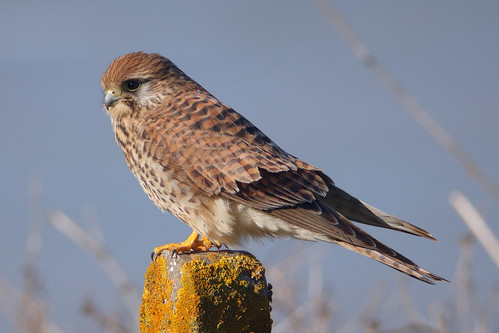
Kestrel (Falco tinnunculus)

I've had the privilege of seeing a wild kestrel up close on a couple of occasions, most recently in February of this year when I encountered one perched in a small tree by the North Foreland golf course. I took some photos and continued on to Botany Bay to see if there was anything interesting on the shore. When I turned around to walk back I was surprised to see the same kestrel standing on a fence post. Naturally, I couldn't pass up the opportunity to take some more photos:
Kestrel (Falco tinnunculus)

From badges to films to poetry (see: The Windhover by Gerard Manley Hopkins) there is something about the kestrel that seems ingrained in the British psyche. A good example of this can be found in Powell and Pressburger's 1944 wartime classic A Canterbury Tale. In the film's prologue, a group of medieval pilgrims make their way towards Canterbury while a voiceover narrates a passage from Chaucer's text. A falconer stops to release a kestrel into the sky. The bird dips and soars ... and transforms into a Spitfire flying above the English countryside. Four hundred years of history spanned in a single cut.

If the description of that scene rings a bell it's because Stanley Kubrick used the same trick in the famous bone-to-spacecraft transition in 2001: A Space Odyssey. Coincidence, homage or blatant rip-off? It's a question that's been debated for fifty years, and will probably be debated for fifty more. In the meantime, the kestrel continues to soar above fields, along cliff-tops, and across marshes - hovering, observing, sometimes descending for prey, and then moving on, seeing colours that no human eye can see as it patiently constructs its daily map of the world.

Effortlessly at height hangs his still eye.
His wings hold all creation in a weightless quiet,
Steady as a hallucination in the streaming air. 
Ted Hughes, The Hawk in the Rain (1957)


See also:
More of my Kestrel photos on Flickr
Kestrel (RSPB)
Kestrel (Birdforum)
Kestrel (Birdguides)

Sunday, 24 December 2017

2017 in Pictures

I normally leave end-of-year round-ups to the more prolific bloggers, but this year I've taken a lot more photos that usual, partly because I bought a new camera, and also to serve as a welcome distraction from the daily hourly news maelstrom generated by Brexit and He-Who-Must-Not-Be-Retweeted. It's reassuring to know that there are still some quiet corners of the world where wagtails still wag, kingfishers still fish, and kestrels still hover, unconcerned by the sound and fury of angry old men who never stop to listen.

But enough of all that; here are some highlights.

January
Photographers often rhapsodise about the "golden hour" just before sunset, and it doesn't get much more golden than this:

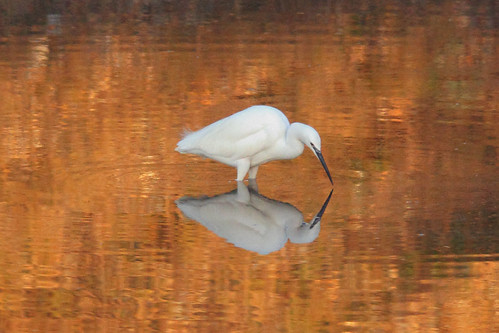
White on Gold

February
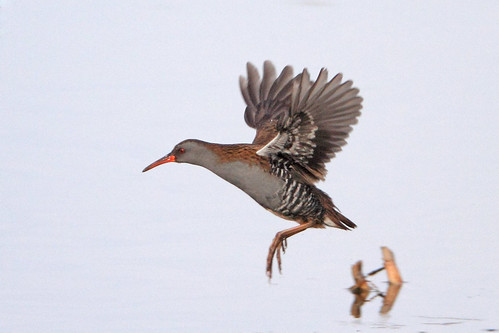
A Water Rail breaks from cover at Grove Ferry:

Water Rail (Rallus aquaticus)

March
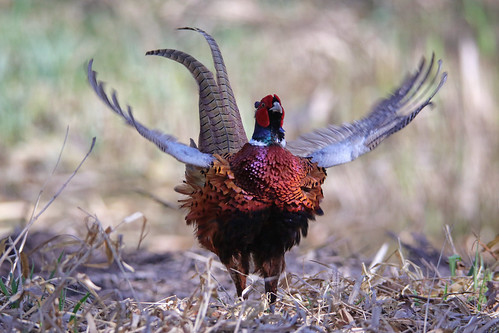
This colourful Pheasant took it upon himself to greet visitors to the Stodmarsh car park:

Pheasant (Phasianus colchicus) 

April
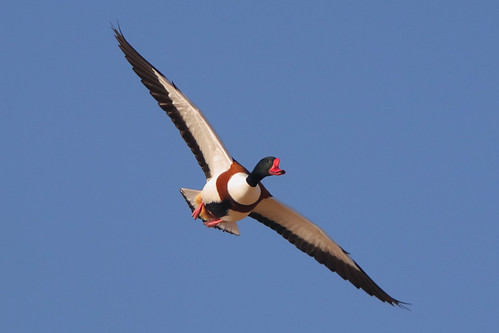
A smart Shelduck flies overhead at North Foreland:

Shelduck (Tadorna tadorna)

May
A dull and drizzly May Day at Grove Ferry was livened up by this magnificent Kingfisher (one dive, one fish caught, one lucky photographer):

Dive!

Later in the month, a decent view (for a change) of a Cuckoo:

Cuckoo (Cuculus canorus)

June
The dragonflies at Grove Ferry / Stodmarsh attracted lots of visitors, including this dashing Red-footed Falcon:

Red-footed Falcon (Falco vespertinus)

July
Fortunately there were still plenty of dragonflies left after the Red-footed Falcon departed, including this Norfolk Hawker (aka the Green-eyed Hawker):

Norfolk Hawker (Aeshna isoceles)

August
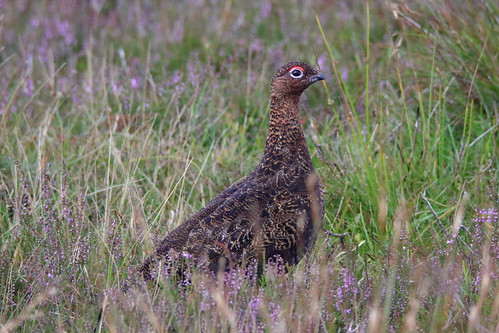
Lots to see in North Yorkshire, including Red Grouse:

Red Grouse (Lagopus lagopus)

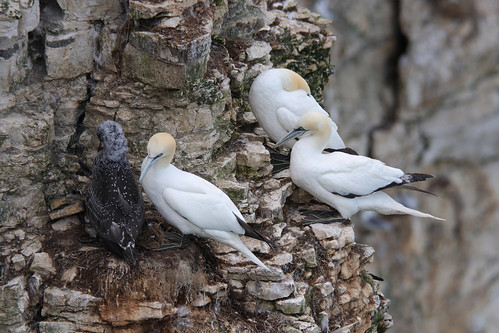
...and the famous Gannets of Bempton Cliffs:

The Gannets of Bempton Cliffs

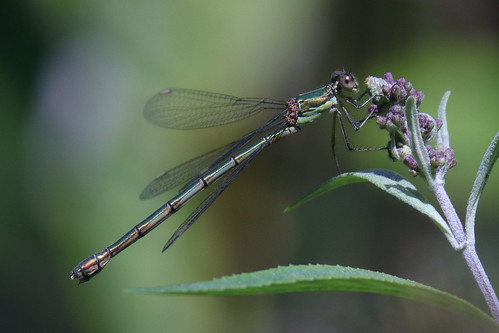
Back in Kent, a relative newcomer to Grove Ferry, a Willow Emerald Damselfly:

Willow Emerald Damselfly

September
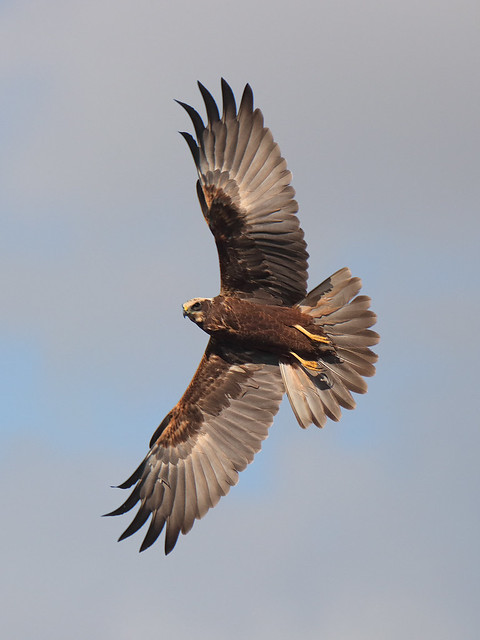
Some drastic Photoshopping saved this image from the bin. The Marsh Harrier changed direction so suddenly I cut off half of the upper wing and had to clone it from the other one. I wouldn't normally do this much work to an image, but I think in this case it was worth it:

Marsh Harrier

October
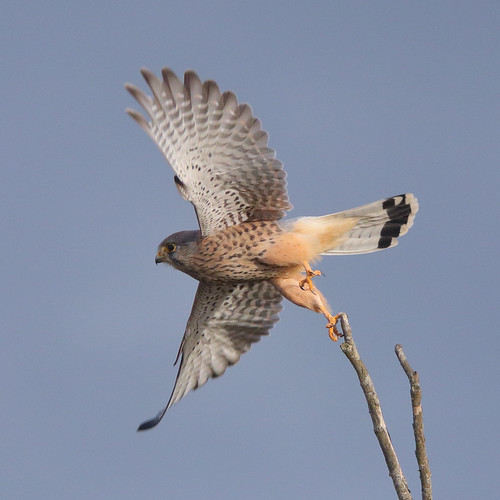
Fortunately my reflexes were a little better when this Kestrel made a quick getaway:

Flight of the Kestrel

November
After seeing a Red-throated Diver in 2014 and a Great Northern Diver in 2015, I wondered how many years I'd have to wait to see a Black-throated Diver in Ramsgate Harbour. Turns out it was only two:

Black-throated Diver (Gavia arctica)

December
Another new visitor to Ramsgate Harbour, an Iceland Gull:

Iceland Gull (Larus glaucoides)

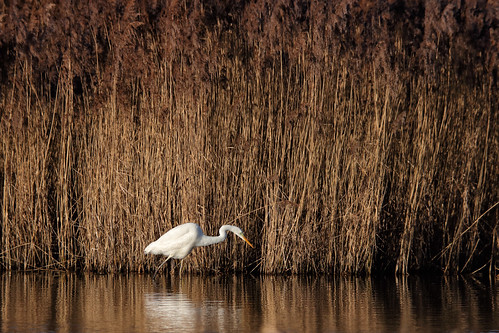
The year started with a Little Egret against a golden backdrop, so it seems fitting to end it with its larger cousin, a Great White Egret, looking for fish in front of the golden reeds of Grove Ferry:

Great White on Gold


No autofocus was used in the making of these pictures.

Saturday, 28 October 2017

Shooting with the Canon 80D

Kingfisher (Alcedo atthis)
Canon 80D & Tele Vue 60 refractor, 1/1250 sec, ISO 640

I tend to steer clear of technical write-ups on this blog as the Internet is already stuffed with photographers telling you all about what their camera can do rather than what they've actually done with it. However, given that the bulk of the traffic to my Flickr pages this year has been driven by people specifically looking for photos taken with the Canon 80D, I thought I'd share my impressions after several months of shooting with it. Please bear in mind that this is all very subjective and I can only compare the 80D against other Canon DSLRs I've used (namely the 350D, 40D and the 7D Mark I).

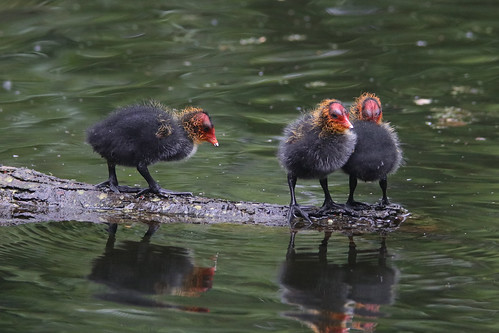
Noise-handling is significantly improved over the 7D Mk I. Tastes vary of course (I don't mind a little grain as long it doesn't look too obviously "digital" - and I actually prefer it to the over-aggressive noise reduction that some photographers insist on), but I find the 80D gives exceptionally clean images up to ISO 400, and stays workably clean all the way up to ISO 3200. The image below was taken in very gloomy conditions at ISO 3200, but I was still able to get a good 12x8 print out of it.

Coot Chicks
Canon 80D & Tele Vue 60 refractor, 1/1250 sec, ISO 3200

From ISO 4000 the noise gets progressively more obtrusive, but still manageable (as demonstrated in this shot of a black cat, taken in poor light at ISO 5000 and downscaled to 12x8). Even at the highest ISOs the 80D's large pixel count means that you should be able to get an acceptable 6x4 print provided you don't have to crop too much.

The 80D's default colour setting seems slightly desaturated compared to previous models, but this can be easily fine-tuned in-camera or in post. The "Peacock Butterfly" test certainly produces reds that look closer to nature than the over-saturated reds of older Canon DSLRs.

I use manual focus for most of my wildlife photography so I can't really contribute anything to the 80D vs. 7D Mk II autofocus debate, but on the occasions I've used the touchscreen focus I've found it to be fast, responsive and very intuitive to use. If, like me, you plan to use your camera for astrophotography now and then, you might consider the 80D's articulated touchscreen to be a more valuable feature than the 7D Mark II's advanced tracking.

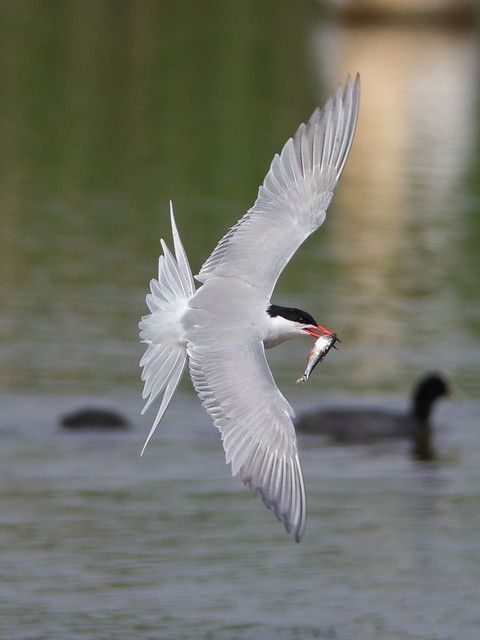
Birds-in-flight are always going to be a challenge using manual focus, but so far I've found that my hit-rate is better than with any previous Canon DSLR. Would autofocus have successfully tracked this tern or would it have zeroed in on the coots in the background?

Tern (with fish)
Canon 80D & Tele Vue 60 refractor, 1/1600 sec, ISO 400

Much has been made of the 80D's improved dynamic range at lower ISOs, and you'll find plenty of examples online where photos have been deliberately underexposed by an extreme number of stops and then fixed in Lightroom/Photoshop to demonstrate the camera's capacity for shadow recovery. In real-world terms you'd have to be doing something drastically wrong to underexpose a photo by that much without realising (and the metering is almost always spot-on - more so than any other camera I've used), but the improved DR does give you scope to be more adventurous in your post-processing, especially when trying to emphasise a particular mood. See this black-and-white shot of Whitby Abbey below for an example (move your cursor across the image to toggle the before-and-after):

Canon 80D + EF50mm f/1.8; 1/250 sec, f/8.0, ISO 125

I'm struggling to think of anything I don't like about the 80D: I miss the mini-thumbstick from the 40D and the 7D, but the touchscreen makes up for this. Overall the Canon 80D is a user-friendly and feature-packed camera (including settings for time-lapse, multi-exposure, minimum shutter speed, flicker detection, and so on) that does everything I would want from a DSLR.


See also:
More of my photos taken with the Canon 80D