Showing posts with label wildlife. Show all posts

Saturday, 28 October 2017

Shooting with the Canon 80D

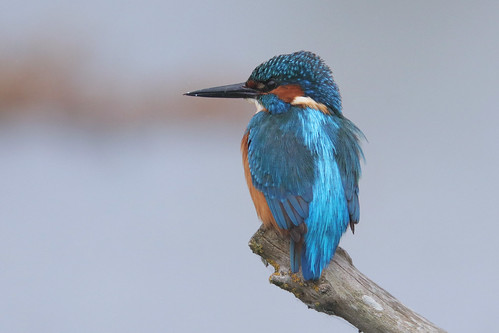
Kingfisher (Alcedo atthis)
Canon 80D & Tele Vue 60 refractor, 1/1250 sec, ISO 640

I tend to steer clear of technical write-ups on this blog as the Internet is already stuffed with photographers telling you all about what their camera can do rather than what they've actually done with it. However, given that the bulk of the traffic to my Flickr pages this year has been driven by people specifically looking for photos taken with the Canon 80D, I thought I'd share my impressions after several months of shooting with it. Please bear in mind that this is all very subjective and I can only compare the 80D against other Canon DSLRs I've used (namely the 350D, 40D and the 7D Mark I).

Noise-handling is significantly improved over the 7D Mk I. Tastes vary of course (I don't mind a little grain as long it doesn't look too obviously "digital" - and I actually prefer it to the over-aggressive noise reduction that some photographers insist on), but I find the 80D gives exceptionally clean images up to ISO 400, and stays workably clean all the way up to ISO 3200. The image below was taken in very gloomy conditions at ISO 3200, but I was still able to get a good 12x8 print out of it.
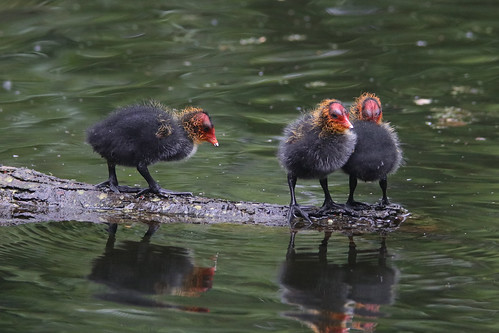
Coot Chicks
Canon 80D & Tele Vue 60 refractor, 1/1250 sec, ISO 3200

From ISO 4000 the noise gets progressively more obtrusive, but still manageable (as demonstrated in this shot of a black cat, taken in poor light at ISO 5000 and downscaled to 12x8). Even at the highest ISOs the 80D's large pixel count means that you should be able to get an acceptable 6x4 print provided you don't have to crop too much.

The 80D's default colour setting seems slightly desaturated compared to previous models, but this can be easily fine-tuned in-camera or in post. The "Peacock Butterfly" test certainly produces reds that look closer to nature than the over-saturated reds of older Canon DSLRs.

I use manual focus for most of my wildlife photography so I can't really contribute anything to the 80D vs. 7D Mk II autofocus debate, but on the occasions I've used the touchscreen focus I've found it to be fast, responsive and very intuitive to use. If, like me, you plan to use your camera for astrophotography now and then, you might consider the 80D's articulated touchscreen to be a more valuable feature than the 7D Mark II's advanced tracking.

Birds-in-flight are always going to be a challenge using manual focus, but so far I've found that my hit-rate is better than with any previous Canon DSLR. Would autofocus have successfully tracked this tern or would it have zeroed in on the coots in the background?
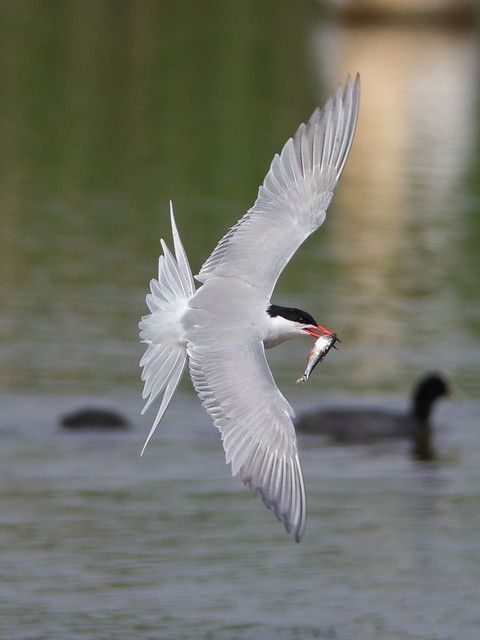
Tern (with fish)
Canon 80D & Tele Vue 60 refractor, 1/1600 sec, ISO 400

Much has been made of the 80D's improved dynamic range at lower ISOs, and you'll find plenty of examples online where photos have been deliberately underexposed by an extreme number of stops and then fixed in Lightroom/Photoshop to demonstrate the camera's capacity for shadow recovery. In real-world terms you'd have to be doing something drastically wrong to underexpose a photo by that much without realising (and the metering is almost always spot-on - more so than any other camera I've used), but the improved DR does give you scope to be more adventurous in your post-processing, especially when trying to emphasise a particular mood. See this black-and-white shot of Whitby Abbey below for an example (move your cursor across the image to toggle the before-and-after):

Canon 80D + EF50mm f/1.8; 1/250 sec, f/8.0, ISO 125

I'm struggling to think of anything I don't like about the 80D: I miss the mini-thumbstick from the 40D and the 7D, but the touchscreen makes up for this. Overall the Canon 80D is a user-friendly and feature-packed camera (including settings for time-lapse, multi-exposure, minimum shutter speed, flicker detection, and so on) that does everything I would want from a DSLR.


See also:
More of my photos taken with the Canon 80D


Friday, 8 April 2016

Oare Marshes

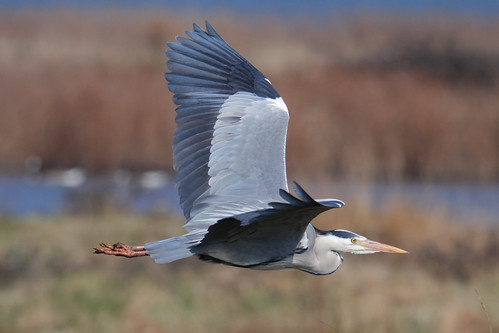
Grey Heron in Flight

Alternative Title: A long overdue write-up of a long overdue trip 


The Oare Marshes KWT reserve is a bit further afield than my usual haunts, but I fancied a change of scene and so I took advantage of a warm March day to pay my first visit. The walk from Faversham station is actually quite pleasant if you don't mind a bit of a trek, but it seems a lot of the visiting photographers/birders park along the road that runs through the middle of the reserve, get the required photos/ticks, and then drive off to the next location - sometimes without even leaving their cars! Such is the accelerated and competitive nature of modern life, but you'll forgive me if I prefer a more sedate approach.

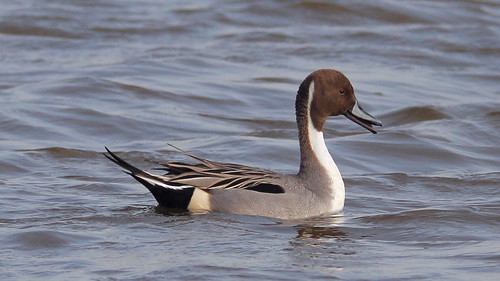
Pintail (Anas acuta)

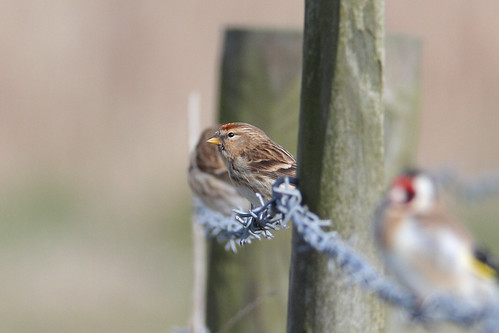
The reserve is quite contained; you can walk all the way around it a lot quicker than, say, the extended Grove Ferry/Stodmarsh circuit. I must have walked round it one-and-a-half times while I was there - perhaps more if you factor in the distance I covered trailing after the mixed flock of Goldfinches and Lesser Redpolls:

Lesser Redpolls (Carduelis cabaret)

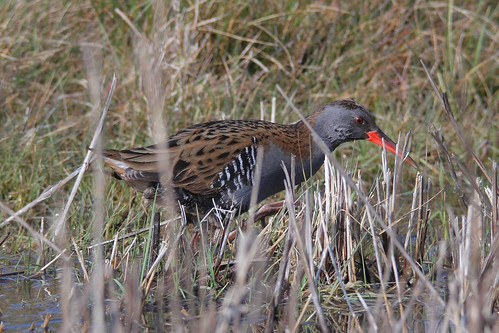
For those who wish to give their feet a rest, there are three hides on the reserve. On the day I visited they were all in pretty good condition. They also happened to be completely empty, which is not entirely surprising given that a) there were no birds anywhere near them, and b) they were facing directly into the wind - which made for an eye-watering experience. Fortunately most of the highlight species could be seen quite easily from the viewing points along the road, including this uncharacteristically obliging Water Rail:

Water Rail (Rallus aquaticus)

I don't generally keep lists, but on this occasion I jotted down all the birds I'd seen and heard (written that same evening, from memory). I counted forty-one different species, which were - for those who are interested in such things - as follows: Avocet, Bearded Tit, Blackbird, Black-headed Gull, Black-tailed Godwit, Blue Tit, Canada Goose, Carrion Crow, Cetti's Warbler, Coot, Curlew, Dunnock, Goldfinch, Green Woodpecker, Grey Heron, Greylag Goose, Herring Gull, Lesser Redpoll, Little Egret, Little Grebe, Magpie, Mallard, Marsh Harrier, Meadow Pipit, Moorhen, Mute Swan, Oystercatcher, Peregrine Falcon, Pintail, Redshank, Reed Bunting, Robin, Shelduck, Shoveler, Skylark, Snipe, Starling, Teal, Tufted Duck, Water Rail, and Wood Pigeon.

Not bad for a first visit, though having read subsequent reports it's possible that I may have walked past a Little Owl without spotting it. Sounds like a good excuse for a return trip...


See also:
More of my photos from Oare Marshes
Oare Marshes (Kent Wildlife Trust)
Oare Marshes Latest Sightings (KOS)

Sunday, 11 October 2015

Two Days in the Camargue

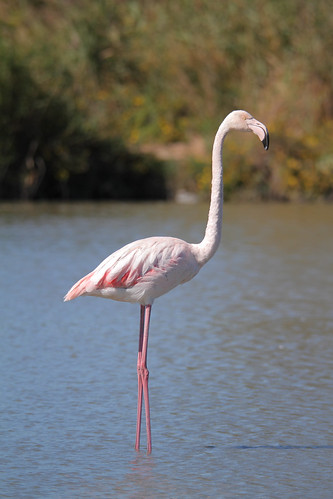
Portrait of a Flamingo

As much as I love writing, if there was one thing I dreaded at school it was having to complete the "What I did on my holiday" essay. So, rather than bore you with every detail, I'm going to boil the trip down to its essentials (i.e. what I anticipate visitors to this blog would want to know about) and let the pictures do most of the talking. If you have any questions not covered by the ones given below then please use the comments section and I will do my best to answer them - though bear in mind that I'm more of a "photographer who happens to shoot birds" than a "birder who happens to have a camera". The object of the trip was not to track down the rarest species, but to have a good time and hopefully get some decent photos along the way. It's also worth noting that the Camargue is B-I-G; two days really only allows time for a whistle-stop tour, but you could easily spend a week there and still only scratch the surface.

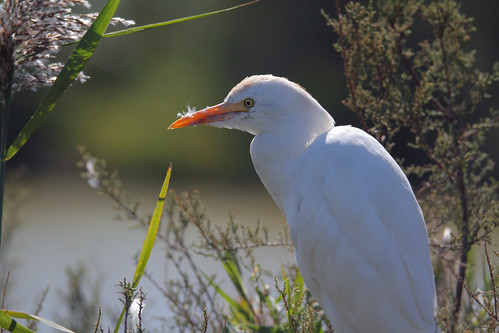
Cattle Egret (Bubulcus ibis)

Quick question: Was it worth it?
Quick answer: Absolutely, yes!

Did you have a guidebook to the region?
Most of the guidebooks I could find for sale are a few years out of date, but there is a free booklet online which proved to be extremely useful. It contains maps, species lists, and much more. The English-language version is available via this link:

Where to watch birds in the Camargue Regional Nature Park - France (PDF)

Using Arles as a base, we visited four of the eleven sites listed, as well as the very pretty - and very touristy - town of Saintes-Maries-de-la-Mer.

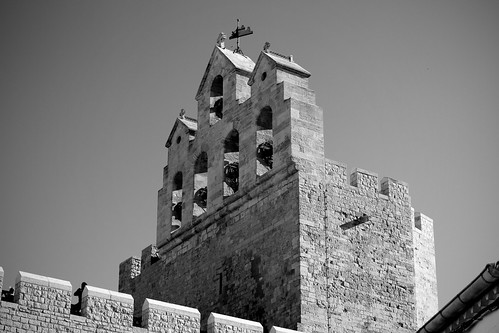
Fortified Church

So what's the big deal about the mistral?
The mistral is a wind, but it's not like any wind you'll experience in England. When it decides to blow it will do so all day - at the same speed and in the same direction - and it won't ease off until the sun goes down. The Camargue is mostly flat, so there aren't many places you can shelter from it. A light, windproof jacket is recommended.

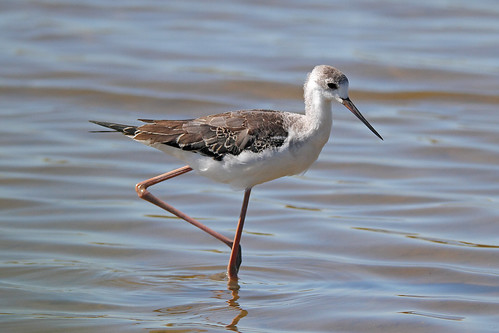
Black-winged Stilt (Himantopus himantopus)

What else should I take?
Sun cream and insect repellent. Make sure you carry plenty of drinking water too; even in September the temperatures can reach the high twenties.

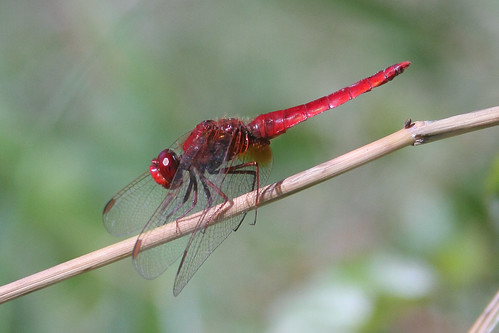
Red Dragon

Best place to go to photograph birds?
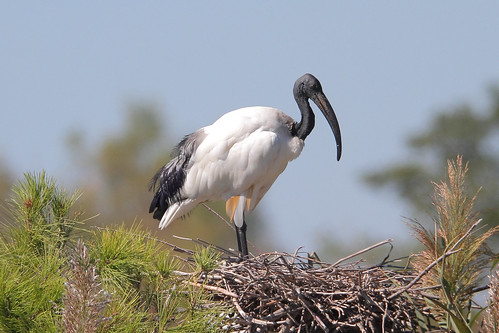
There may well be other reserves (that we didn't have time to visit) within the Camargue that provide a similar experience, but if you want to see the key species of the region at close quarters and get photos "in the bank", so to speak, then the Pont de Gau bird sanctuary is the place to go. As well as the famous flamingos, we saw, among other things, grey herons, little egrets, cattle egrets, spotted redshanks, black-tailed godwits, avocets, black-winged stilts, spoonbills, and a sacred ibis (below). Admittedly, with the exception of the flamingos and the ibis, these are all species you can see in England with increasing regularity, but probably not all in one place, and certainly not within a few feet of the viewing hide.

Sacred Ibis (Threskiornis aethiopicus)

Recommended eating?
All three of the restaurants we visited in Arles were good, but the Restaurant Le Plaza La Pailotte was exceptional. I had the duck breast (don't tell the wildfowl!) and it was, quite simply, one of the finest meals I've ever had. (And no, I didn't take a photo of my food.)

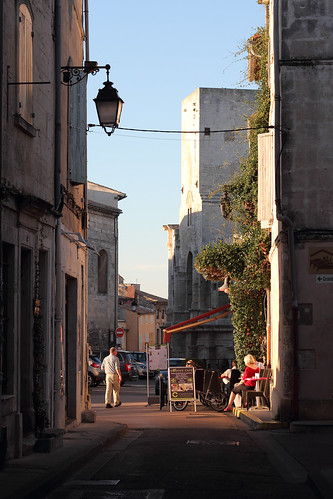
Rue Porte de Laure

Other highlights that you can't convey in a photograph?
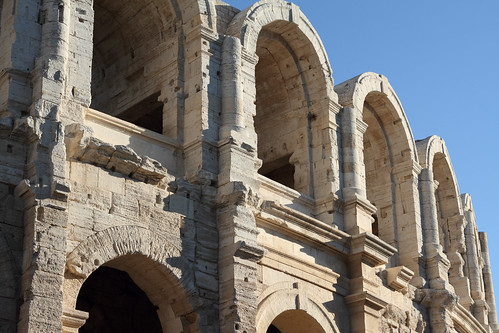
Bats flying above the Rhone at sunset, the strangely soothing background noise of insects (presumably crickets) chirping at night, stumbling upon a bizarre tractor parade in Arles on Saturday evening, still being able to feel the lingering warmth of the sun and the force of the mistral on my face long after the sun had gone down, the sheer physical and historical presence of the Arles Roman Amphitheatre (below), waking up early to see Sirius shining higher in the sky than I've ever seen it before, and of course a welcome reminder that you can't beat a genuine French baguette.

Arles Amphitheatre

Anything else worth knowing?
The SatNav on the rental car was, unsurprisingly, in French. After some fumbling we found the option screen to change the language. English was not one of the available languages. Fortunately, if you know your gauche from your droite, you should be able to cope.

Finally, special thanks must go to my friends Mark, for his organisational and driving skills, and to Tony, for his near-supernatural ability to liken almost any situation to an episode of the old TV show Only Fools and Horses.

See more of my photos from the Camargue and Arles on Flickr.