Tuesday, 31 December 2019

2019 in Pictures

A very wet (and unseasonably cold) autumn put a bit of a dampener on 2019, but otherwise it was another good year for photos, with a few surprises along the way...

January
An old favourite to begin - a Stonechat at North Foreland:

Stonechat (female)

February
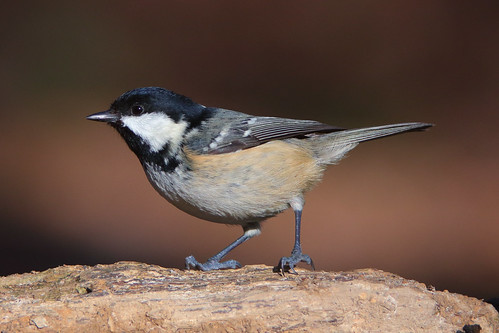
A long overdue return visit to Bossenden to see some woodland birds, including this Coal Tit:

Coal Tit (Periparus ater)

And a Nuthatch:

Nuthatch (Sitta europaea)

March
A Guillemot (not a penguin) stretching its wings at Ramsgate:

"I'm not a penguin!"

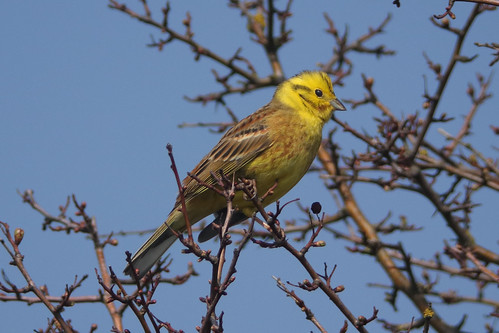
No mistaking this Yellowhammer at Dover:

Yellowhammer (Emberiza citrinella)

April
More wing-spreading, this time courtesy of a Tufted Duck at Stodmarsh:

Tufted Duck (Aythya fuligula) 

May
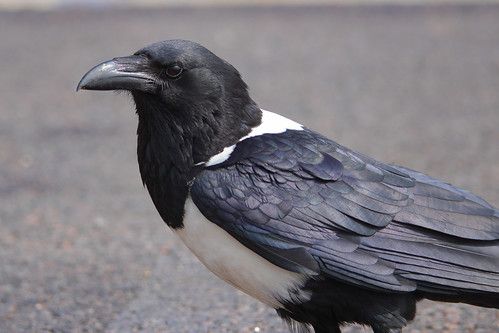
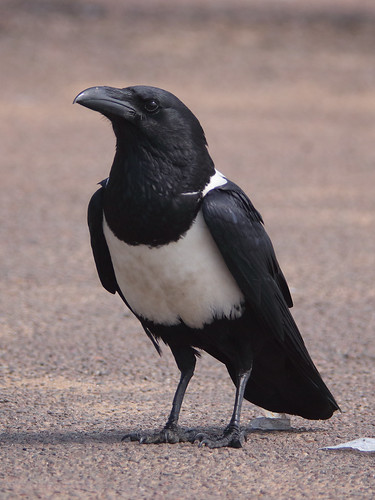
A Pied Crow (of all things) on Broadstairs jetty:

Pied Crow (Corvus albus)

June
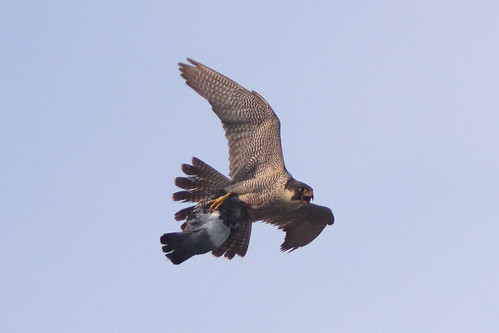
+ 1 Peregrine, -1 pigeon:

Peregrine & Prey

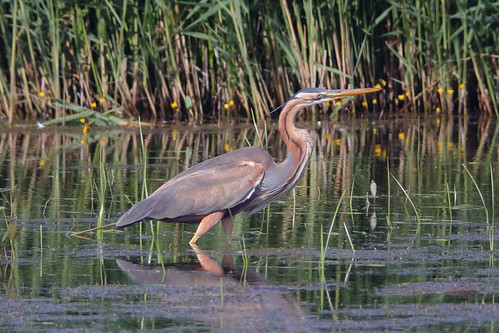
I'd like to tell you I spent hours patiently waiting for a glimpse of this elusive Purple Heron, but it emerged from the reeds only a few minutes after I entered the hide. After catching a couple of fish it flew off - apparently never to be seen again. Sometimes (but only sometimes) I'm in the right place at the right time.

Purple Heron (Ardea purpurea)

July
The month in which winged insects take centre-stage, while the birds enjoy a well-earned break.
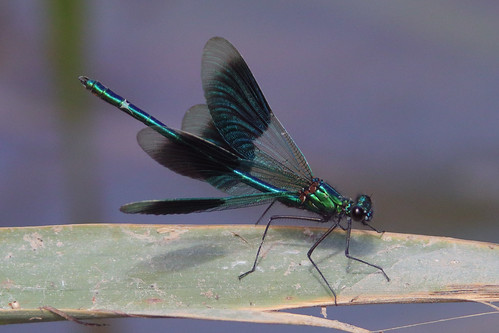
This is the first shot of a Banded Demoiselle I've managed where the wings weren't completely closed:

Banded Demoiselle (Calopteryx splendens) 

August
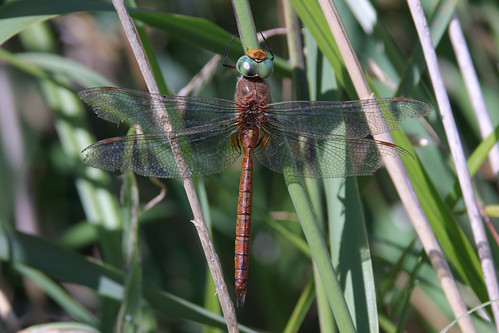
X marks the Dragonfly spot:

Hawker Dragonfly

September
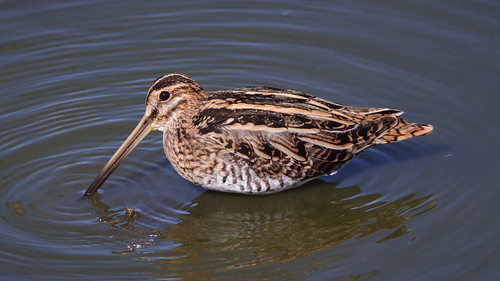
A Snipe at Stodmarsh, photographed from the Reedbed Hide:

Snipe (Gallinago gallinago)

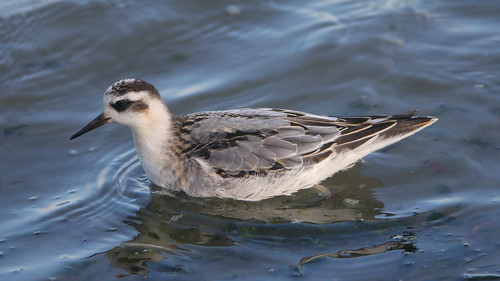
This very charming Grey Phalarope at Birchington was another first for me in 2019. I took a Friday off work to see it (and lucky I did because it was gone by Saturday).

Grey Phalarope (Phalaropus fulicarius)

October
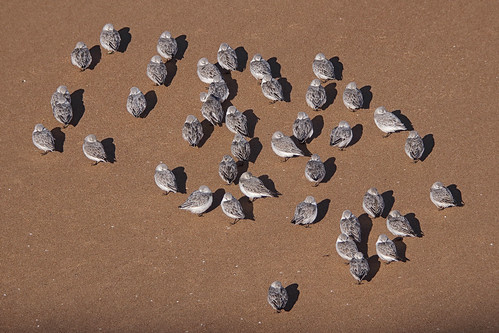
An shot looking over the cliff at the Kingsgate Sanderling roost:

Sanderling Roost

November
This might well be the second-most photographed bird in England (after that Cuckoo at Thursley Common), but I never get tired of seeing a Kingfisher:

Kingfisher (Alcedo atthis)

December
And finally, the obligatory Kestrel, seen here flying off with a tasty meal:

Kestrel with Prey

All the photos on this page were taken with a Canon 80D DSLR and my trusty Tele Vue-60 refractor  - that's right, no autofocus.

Wednesday, 30 October 2019

Meet the Galactic Neighbours

What's the most distant object you can see with the naked eye? Unless you live near a dark-sky site (and have exceptional eyesight) the answer is most likely the Andromeda Galaxy. To find it, go outside on a clear, moonless autumn evening and allow a few minutes for your eyes to adjust to the dark. The Andromeda Galaxy is located about midway between the square of Pegasus and the "W" of Cassiopeia.

Andromeda constellation map

You should be able to see a faint smudge of light that increases in size when you look slightly to one side of it. (If you're not sure you're looking in the right place, use a pair of binoculars and you should spot it straight away.) That faint smudge of light takes on new meaning when you consider it's a vast complex of stars and dust and gas 220,000 light years across and 2.5 million light years away. It's also barrelling towards us at 110 kilometres per second, so if you hang around a few billion years it's going to get a whole lot bigger and brighter.

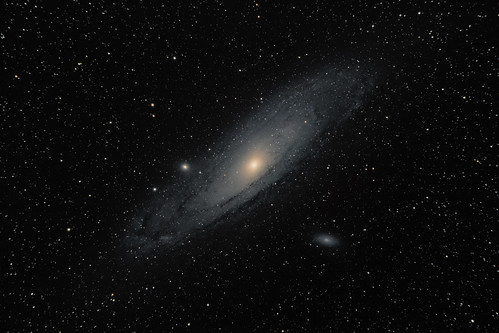
In the meantime we'll have to make do with views like the one below. This is an image I made from an hour's worth of exposures using a Canon 80D DSLR and a Tele Vue-60 refractor (focal length approximately 400 mm):

Andromeda Galaxy

Telescopically, M31 is impressive whatever instrument you point at it, but picking out the kind of detail shown in the photo above is more of a challenge than you might think. On a good night I can see the two dark dust lanes northwest of the core region, and also a vague suggestion of clumpiness in the spiral arms, particularly around the star cloud NGC 206. The two companion galaxies, M32 and the fainter M110, are also easy to spot.

Andromeda and our own Milky Way are the two largest members of the Local Group - a modest collection of at least 50 (mostly dwarf) galaxies occupying a region of space 10 million light years across. Roughly 14 degrees south of M31 is the third largest member of the Local Group, M33 (aka the Triangulum Galaxy). Here's an image I took at the end of August, using the same camera/telescope combination, this time assembled from two hours of data.

Triangulum Galaxy

Although M33 is only little further away (relatively speaking) than M31 at 2.73 million light years it has a very low surface brightness - and is consequently much harder to see. It's also very sensitive to light pollution. Oddly enough I always found this galaxy easier to spot in a pair of 7x50 binoculars than in my 4-inch refractor. Even on a good night it was vanishingly faint.

In the 10-inch Dobsonian it appears as an extended misty patch of light with a tiny star-like nucleus. On a favourable night I can just about make out the two main spiral arms (the northern one is brighter and easier than the southern one). Higher magnification reveals a prominent misty spot 13 arcminutes northeast of the nucleus (visible as a blue blob in the image above), lurking close to an 11th magnitude foreground star. This is NGC 604, one of the largest star forming regions in the Local Group. It's a whopping 1,500 light years across, which is roughly the distance between here and the Orion Nebula.

Both M31 and M33 have been extensively studied by astronomers using the Hubble Space Telescope and, as you might expect, the images are spectacular:

Hubble's high-definition panoramic view of the Andromeda Galaxy
Triangulum Galaxy shows stunning face in detailed Hubble portrait

Tuesday, 28 May 2019

Into the Whirlpool

Ask someone to draw you a galaxy and chances are they'll come back with a spiral shape. Even a small telescope will show you plenty of galaxies (if you know where to look), but how large a scope do you need to see those dramatic spirals? Edge-on galaxies like M82 and NGC 4565 show lots of detail in modest-sized scopes because their light is concentrated into a smaller area, but the majority of face-on galaxies have such a low surface brightness that the slightest haze or encroaching light pollution can render their spiral arms invisible.

There are a few notable exceptions however, and for northern hemisphere observers, the consensus seems to be that Messier 51 (commonly known as the Whirlpool Galaxy) is the best of the bunch. It resides some 25 million light-years away in the constellation of Canes Venatici (the Hunting Dogs), and can be found high overhead on spring evenings near the tail of the Great Bear (Ursa Major).

Here's a photo I took (actually forty-three 90-second exposures, stacked together) in March, showing the spiral very clearly:


M51 & NGC 5195, 28 Mar 2019; Canon EOS 80D + Tele Vue-60 + Vixen Super Polaris

For a larger crop, see the version on my Flickr page.

Sixty-five minutes' worth of sensor data is one thing, but how much of that detail can you actually see with your own eyes? M51 and its interacting companion NGC 5195 are easy enough to spot through even a small scope, but it wasn't until I got the 10-inch reflector that I was able to see them as more than a pair of faint fuzzy blobs. Even then, the detail was elusive, with the dark spaces between the Whirlpool's arms often more apparent than the arms themselves.

My sketching skills are very rusty so it took me three attempts before I got something I was happy with, but here's an approximation of what M51 looks like through a medium-sized scope on a good night:


For this I used the 10-inch Orion XT10 and a Tele Vue Nagler 9mm eyepiece, giving a magnification of 133x.

Depending on the quality of your night sky, you may be able to see M51's spiral with a smaller telescope. I was never able to make it out with my 4-inch refractor (although the two galaxies themselves were obvious), and even with the XT10 I can't always see it, as demonstrated by these excerpts from my observing notes:

19 May 2018 (first night out with the new scope; sky a little hazy)
Not well placed (wrong side of meridian), but both galaxies showed bright cores. Strong hint of spiral arm structure, and a star superimposed over the face of the galaxy (not a supernova!).
10 February 2019 (cold, but not freezing; sky transparency improved considerably once the crescent moon got out of the way)
In a night of highlights, M51 was the undoubted stand-out. After staring at it for a couple of minutes I suddenly realised I could see the spiral arms quite clearly, defined by the dark space separating them. One arm curling out from core region around a foreground star. A magnificent sight at 133x, even though it was still some way from the zenith. With averted vision it started to look like a ghostly monochrome photo.
31 March 2019 (slightly chilly, windy with occasional strong gusts; transparency good, but not up to the standard set on 10 Feb)
Tonight M51 and NGC 5195 had an almost ghostly aspect about them; the spiral arms seemed to fade in and out of existence independently of averted vision. The view wasn’t substantially improved at 240x, other than highlighting some of the brighter areas with a milky glow. 
4 April 2019 (chilly, gusty evening; excellent seeing, transparency improving as night went on)
Best view of spiral structure since 10 Feb; showed particularly well in averted vision. Dark areas between arms just about visible in direct vision. Also found a faint, round little galaxy roughly south of M51 – not plotted in the Pocket Sky Atlas, but later identified as NGC 5198.

(If you're into this sort of thing and you want to read more of my observing notes, I'm in the process of putting them online at https://mskastro.blogspot.com/ )

The visibility of the spiral is very sensitive to sky conditions, so if you don't succeed on one night, try again on another (and make sure your eyes are fully dark-adapted). Patience and persistence are vital. And here's another tip: if M51's spiral still seems maddeningly faint, steer your scope to the other side of the Great Bear's tail and see what you make of the larger (and fainter) spiral galaxy M101. Trust me, when you return to M51 it will seem positively bright by comparison.

So now you have an idea of what it takes to see the spiral in M51, but what about resolving individual stars in this beautiful galaxy? For that I recommend taking a very deep dive into this image by the Hubble Space Telescope...


Tuesday, 21 May 2019

Pied Crow Tour of Britain reaches Broadstairs

Pied Crow (Corvus albus)

When I first heard about a Pied Crow being sighted in East Kent I assumed it was some kind of birders' in-joke. After all, what is a "pied crow" if not the definition of a magpie? Also, there's no such bird mentioned in either the Collins Guide or the British Birds (WILDguides) book, not even in the once-in-a-lifetime lists of obscurities tucked away at the back.

But it turns out the Pied Crow is definitely not a magpie, as I found out when I caught up with it on Broadstairs jetty last Saturday (18 May). Even from a distance the white "vest" was obvious, and the bird itself is bigger than a conventional carrion crow (though not as large as a raven).

Pied Crow (Corvus albus)

So is this smartly-dressed corvid (normally a resident of sub-Saharan Africa) a genuine wild specimen or an escapee? I won't get into the speculation on where it might have come from as there's already plenty of that online by people far more knowledgeable than me on such matters, but I will refer you to this excellent article by Sam Viles on BirdGuides. Will it fly (or hitch a ride) across the Channel or will it continue its tour of Britain's seaside resorts? Like the outcome of B****t, your guess is as good as mine.

Next stop France?

As I think I've stated before on this blog, I don't keep a count of the birds I've seen and photographed (although I do keep an index), so it makes little difference to me whether or not it gets accepted onto an official list by the powers-that-be. But I do know that this unusual and striking bird has traveled a long way to get to where I live, so I'm glad I got to see it.

See also:
Birdguides: Pied Crow
Birdforum Opus: Pied Crow

Sunday, 13 January 2019

Into the Orion Nebula

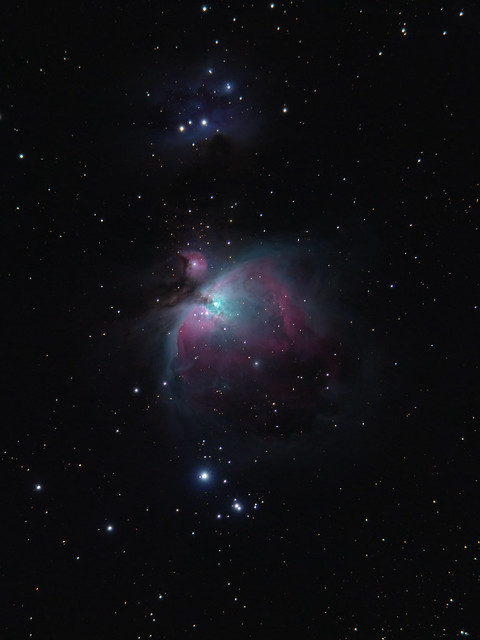
Orion Nebula (reprocessed)
M42, Orion: Tele Vue 60 + Canon 80D + Vixen Super Polaris
"An unformed fiery mist, the chaotic material of future Suns" - William Herschel, 1789 
Herschel's description (written long before spectroscopy revealed the true nature of gaseous nebulae) could hardly have been more prescient. The Great Orion Nebula (Messier 42) is indeed a cradle of new stars (at 1,300 light years, the nearest star-forming region to our own sun), visible to the naked eye as a misty patch in Orion's Sword on winter nights.

Viewing M42
I'm occasionally asked what it looks like through a telescope: a one-word answer would be "Majestic", but don't expect to see the full extent of the nebula - or indeed the vivid colours that you get in photos like the one above. As with most deep-sky objects, the Orion Nebula rewards careful and prolonged examination. Here's a sketch I made a long time ago (for GCSE Astronomy coursework!) illustrating the typical low-power view through a small telescope under suburban skies:


One telescopic feature you won't often see clearly in photographs is the Trapezium, a tight grouping of four hot young stars whose ionising radiation has helped sculpt the nebula into the shape we see today. In my 4-inch refractor the nebula is nicely framed in a 24mm Panoptic eyepiece (42x magnification) with layers of nebulosity building up to the core. Add in an Ultrablock filter to improve the contrast and the nebula takes on the appearance of a swooping bird of prey. With a 5mm Nagler (200x) under steady skies, a fifth member of the Trapezium is just visible.

So far the weather has only allowed me one opportunity to look at M42 with the XT10, but even under less than ideal viewing conditions it was immediately obvious that the extra aperture had improved the view dramatically. The core region had a strong green tint and averted vision made it so bright that the Trapezium was almost lost in the glare. Lots of finely detailed structure was visible with dark rifts cutting through the nebulosity. The Ultrablock filter wasn't really necessary for such a bright object, but it did seem to increase the overall extent of the nebula, particularly on the northern side.

Photographing M42
For any birders who've made it this far, the Orion Nebula is arguably to astrophotography what the kingfisher is to bird photography, the gateway drug that lures you into a lifetime hobby. (It even comes with its own fish, of a sort.) The image at the top of this post is a stack (not a mosaic) of 108 thirty-second exposures (plus 15 dark frames and 21 flat frames). As I'm still shooting unguided (for now) I've been careful not to choose targets too far away from the celestial pole, so at -5 degrees declination M42 presented the biggest test yet of my polar alignment accuracy. Fortunately the Great Nebula is a forgiving target - you can pull out a considerable amount of detail and colour even with relatively short 30-second subs. If you look closely, some slight trailing is evident, but not enough to spoil the final image.

Processing M42
As I've said before, acquiring all the light-frames (plus darks and flats) is only half the battle; there's still a lot of work to do. The image above was assembled using the freeware program Sequator. Compare it with my first attempt using the more widely-known freeware DeepSkyStacker. The samples on the Sequator website suggest it's optimised for landscape astrophotography (i.e. wide-angle shots in which the horizon is visible), but it seems to do an equally good job for deep sky photography. In terms of workflow, I certainly found it easier to process the stacked image produced by Sequator. As you can see in the mouse-over comparison below, Sequator did a much better job of retaining the detail around the Trapezium area. There's less noise too, although the DeepSkyStacker version shows more of the fainter regions of the nebula.


It's also worth noting that Sequator did an excellent job of identifying and removing the light pollution gradient. DeepSkyStacker doesn't cater for this so I used the Light Pollution Removal tool in Noel Carboni's Astronomy Tools Actions set (which, despite having more user control, did on this occasion leave a series of contour lines in and around the brightest parts of the nebula). The Sequator stack did contain some colour noise, but this was easily removed using the Colour Blotch Reduction tool from the same set.

Other pros and cons: Sequator was fast (less than 30 minutes processing time compared to up to an hour for DSS). However, it also left some curious purple "appendages" around some of the brighter stars, as shown in the crop below:


I've seen Sequator described as "stacking for dummies" on one popular astro-forum, but on the above evidence I think it'll be this dummy's image-stacker of choice for the foreseeable future. This is by no means a rejection of DeepSkyStacker, but more likely an indication that I still haven't learned how to get the best out of it.

I like the colours better in the Sequator version too, although that's a matter of personal taste.

Which one do you prefer?

Sunday, 30 December 2018

2018 in Pictures

I didn't think I'd be able to top the previous year, but 2018 served up a bumper crop of sightings (September in particular had enough highlights to fill a best-of list all by itself). But here for your viewing pleasure, after much vacillating, are the pick of the bunch:

January
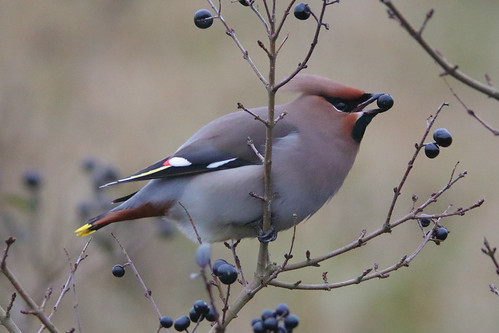
There's nothing like a Waxwing to brighten up a dull winter's day:

Waxwing (Bombycilla garrulus)

February
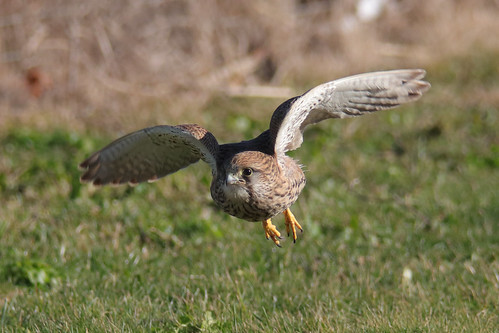
I've got to include at least one Kestrel (it's the Law) and this bird was a bit special:

Kestrel (Falco tinnunculus)

March
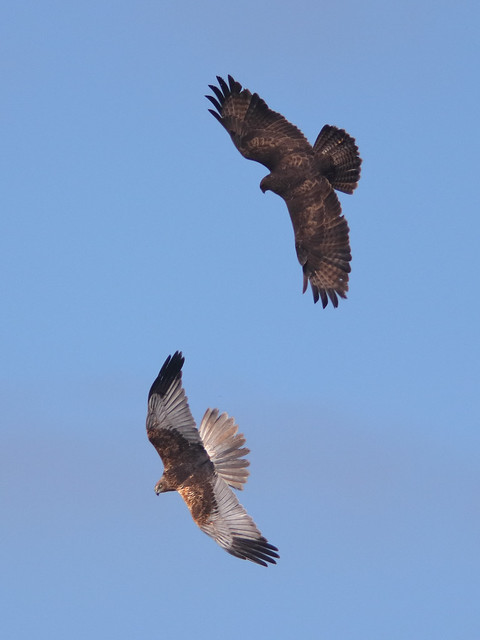
Why go to the trouble of catching your own frog when you can steal one from a Marsh Harrier?

Buzzard vs Marsh Harrier

April
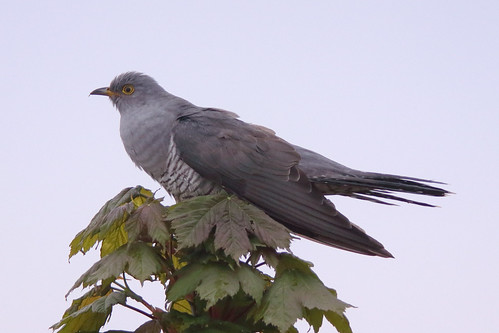
The light wasn't great that morning, but it's not every day that a Cuckoo pops up right in front of you:

Cuckoo (Cuculus canorus)

May
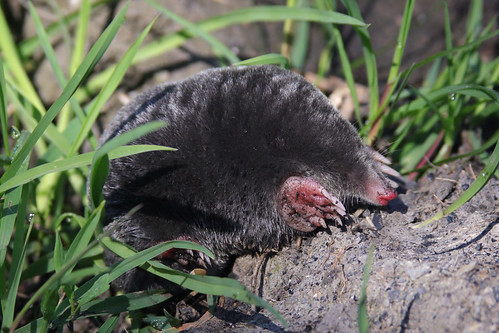
Here's something else you don't see every day, a Mole out in the open:

Mole (Talpa europaea)

...though it really wasn't the best day for small furry things to come out of hiding.

Also at Stodmarsh, a Hobby grabs an in-flight snack:

Hobby (Falco subbuteo)

June
At Foreness Housemartins collect mud for their nests:

House Martins (Delichon urbicum) 

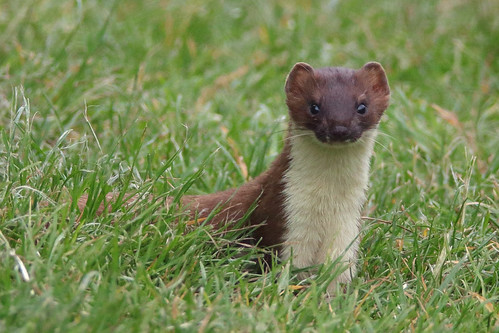
And a Stoat pops up at Stodmarsh:

Stoat (Mustela erminea)

July
A typically quiet month for birds, but not for dragonflies such as this Norfolk Hawker:

Norfolk Hawker (Aeshna isoceles) 

August
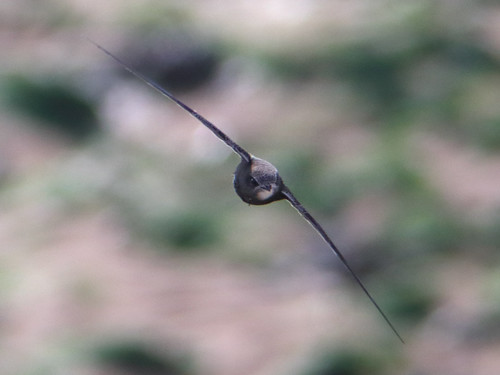
Last ones to arrive; first ones to leave. A Swift prepares for its autumn migration at North Foreland:

Swift (Apus apus)

September
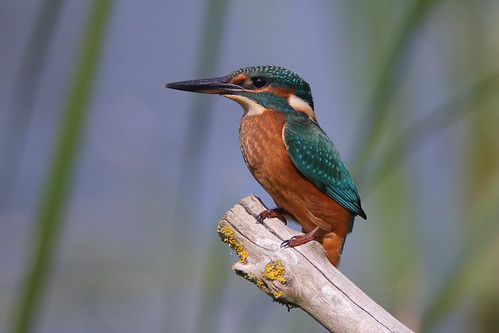
1st September at Grove Ferry was one of those rare and remarkable days where everything falls into place. It included Spotted Flycatchers and a Bullfinch (in the same tree), a Whinchat, and even a surprise Bittern. But it was the reserve's star attraction that stole the show:

Kingfisher (Alcedo atthis)

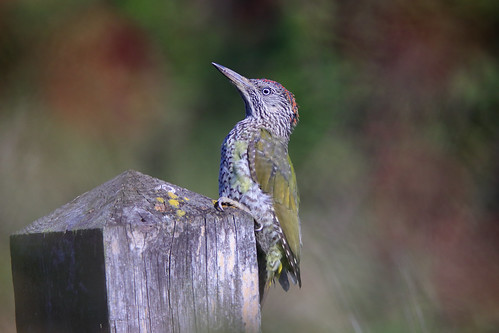
Return visits later in the month uncovered a Small Copper butterfly (the first one I can recall seeing at the reserve), plenty of Willow Emerald damselflies, Lizards, and this juvenile Green Woodpecker:

Green Woodpecker (Juvenile) 

October
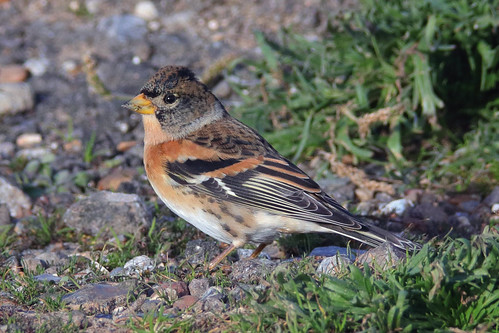
Winter birds start arriving along the coast, including this handsome Brambling at North Foreland:

Brambling (Fringilla montifringilla) 

November
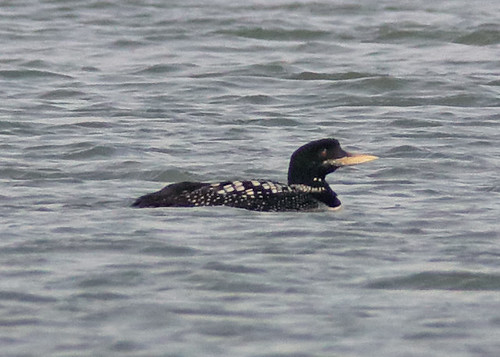
Not the best photo, but arguably the best bird of the year; Scott Haughie's White-billed Diver (in summer plumage!) which attracted birders and photographers from across the country:

White-billed Diver (Gavia adamsii) 

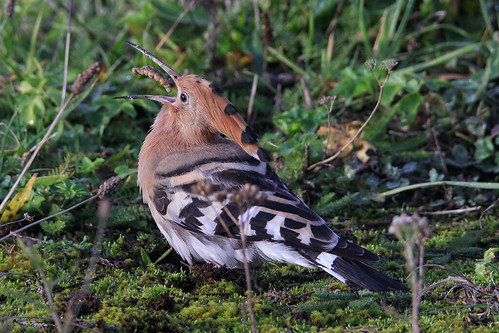
I expect I'll be frowned on in some quarters for including it, but this ESCAPED Hoopoe brought some entertainment (unless you're a grub) to an unlikely part of Thanet:

Grub's Up (again)

December
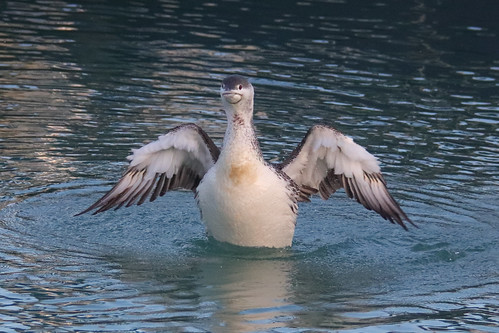
Another month, another loon; a Red-throated Diver (not in summer plumage) in Ramsgate Harbour:

Red-throated Diver (Gavia stellata)

All the photos on this page were taken with a Canon 80D DSLR and the trusty Tele Vue-60 refractor.

In the next post, I will be returning to outer space.

Wednesday, 22 August 2018

A Journey into Astrophotography

I'll say one good thing for He-Who-Must-Not-Be-Retweeted; he's encouraged me to turn my attention away from this increasingly nonsensical planet and back into deep space*. I've dabbled with astrophotography before (hand-tracking with a 50 mm lens), but mostly I've stuck to the brighter objects like the moon and Jupiter. Long-exposure astrophotography at focal lengths greater than 300 mm requires precise motorised tracking, but it was only after a trip to Astrofest 2018 (and some intensive research) that I figured out a practical and affordable way to go about it.

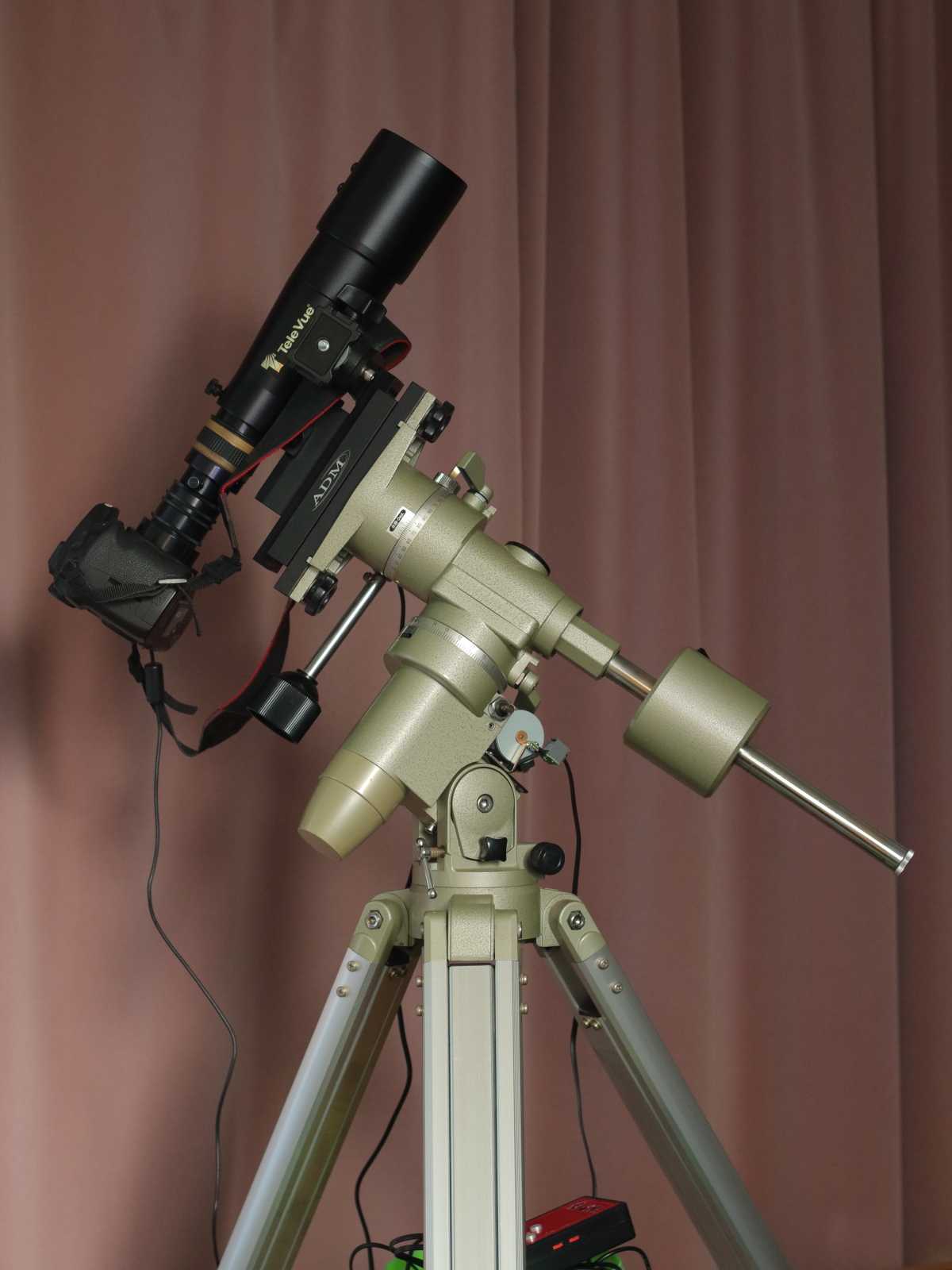
Here's a picture of the trusty Tele Vue-60 (the same scope I use for most of my wildlife shots) in its latest mode atop the equally trusty Vixen Super Polaris mount (fitted with Skywatcher dual-axis motor drives and an ADM dovetail plate adaptor):


With a field-flattener attached the TV-60 is roughly equivalent to a lens of 400 mm focal length. So far, this arrangement is good enough for exposures up to about two minutes duration depending on the accuracy of my polar alignment. (The Skywatcher handset does have an ST-4 port for autoguiding should I wish to attempt longer exposures in the future.) Here's another angle showing the motor drives attached to the Right Ascension and Declination axes:


Any serious astrophotographers visiting this blog might be shaking their heads at this point and muttering about vignetting and edge-of-field distortion, red sensitivity, thermal noise etc. in much the same way that serious wildlife photographers might mutter about autofocus and aperture control when they see what I'm using. But the point is, I don't get enough clear, moonless nights a year to justify spending the kind of megabucks that others spend on their gear. And, crucially, I can use the same DSLR and the same little scope for multiple purposes (which probably explains why the focuser is starting to look a little worse for wear). And (whisper it quietly) one good photo of the Orion Nebula looks very much like another good photo of the Orion Nebula, no matter where you are on the earth. Unless you have your own observatory equipped with an adaptive optics system, you're probably not breaking new ground.

That's not to say I won't be eagerly imaging the Orion Nebula when I get the chance just like every other amateur, but M42 is a spectacle of the winter sky, so for my first target I chose the globular cluster M13 (because it's big, bright, and not too far away from the north celestial pole):
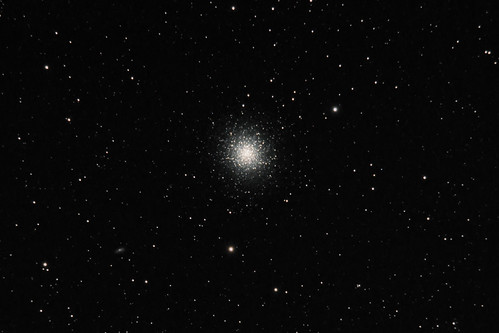
M13 Globular Cluster
M13, Tele Vue-60 + Canon 80D (30 x 1 min @ ISO 800)

The long exposure times required to make an image like this turn pinprick stars into blobs of light, giving the false impression that they are almost touching each other. Although direct interactions in globular clusters do occasionally happen (the most likely origin of blue stragglers), the average distance between stars in a typical globular is actually 0.1 to 0.5 light-years, a fraction of the distance between here and Proxima Centauri (4.2 light-years), but still many times the size of our planetary system. This image from the Hubble Space Telescope resolves the core of M13, giving a better impression of the star density. Around 150 globular clusters are known to orbit our galaxy, dipping in and out of the galactic plane in highly inclined orbits. To put that in perspective, M87, the giant galaxy at the heart of the Virgo Cluster, is surrounded by 16,000 globular clusters.

I recently had the pleasure of looking at M13 through a 10-inch telescope and the result was breath-taking (so much so that I completely forgot to look for NGC 6207 - the "little" galaxy visible towards the bottom-left of the image above).

In my 4-inch achromat M13 takes on the appearance of a "grainy snowball thrown against a pane of glass", always on the brink of being resolved but never quite making it, except when averted vision is employed. In the 10-inch scope (at 133x magnification with a 9mm Nagler eyepiece) it was transformed into a vast three-dimensional city of stars, its brighter members glinting like crushed diamonds right across the face of the cluster, with hundreds - perhaps thousands - more revealing themselves in averted vision. The longer I looked, the more impressive it became, as I began to discern chains of stars arcing out from the centre.

M13 is arguably the most spectacular globular cluster visible from UK latitudes, but there are several others which run it close, such as M3 in the constellation Canes Venatici:
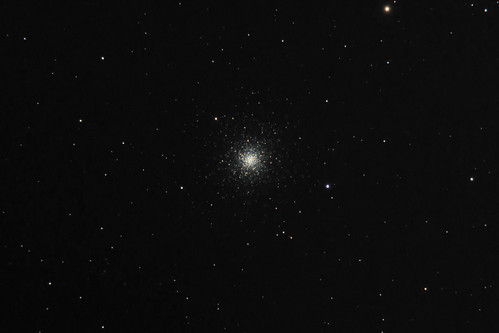
Messier 3
M3, Tele Vue-60 + Canon 80D (31 x 1 min @ ISO 800)

Of course, acquiring the images is only half the battle; processing them is an art-form in itself. I'll leave those details for another time as I'm still very much a beginner at this, but if you want to know what software I used, the links are here.
In the meantime, if you ever get the opportunity to look at M13 or any of the other showpiece globulars through a medium to large-sized telescope, I strongly recommend it. Drink in the spectacle, contemplate what you're seeing, and then look at it again. Photographs just can't do it justice.
See more of my TV-60 deep-sky photos on Flickr.

*Famous last words... While I was drafting this post, He-Who-Must-Not-Be-Retweeted announced the creation of SPACE FORCE (I swear I can hear the echo as I'm typing it). It seems there really is no escape from the Tangerine Nightmare.